

3D printingSports shoes have become a consumer product that has come into the eyes of the public. In March 2018, Adidas officially sold 100,000 pairs of Futurecraft 4D running shoes, each at a price of 2,600 yuan. This pair is equipped with3D printingRunning shoes with midsoles are sought after by consumers.Before the launch of Futurecraft 4D running shoes, internationally renowned shoe manufacturing brands such as Adidas, Nike, Under Armour, New Balance, etc.3D printingSneakers with midsole.At the same time, well-known domestic shoe manufacturers Peak and Li Ning are also actively trying3D printingTechnology, and develop related products. From the midsole, to the upper, to the whole shoe manufacturing…3D printingThe application of technology and materials in the field of shoe manufacturing is still continuing. Although the technologies are different, the goal is to provide the shoe manufacturing industry with faster speed and lower cost, which can flexibly meet the needs of complex design and meet the needs of footwear products. A new generation of digital manufacturing technology that requires rapid iteration in small batches.
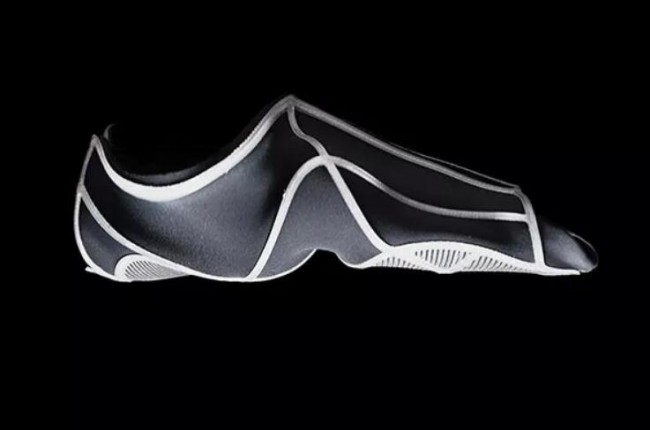
Recently, the MIT Self-Assembly Laboratory and a shoe company jointly demonstrated a completely3D printingTechnology-manufactured shoes, using technology for Rapid Liquid Printing developed by the self-assembly laboratory3D printingTechnology, with printing speed and readily available printing materials, this technology provides new possibilities for shoe manufacturing.
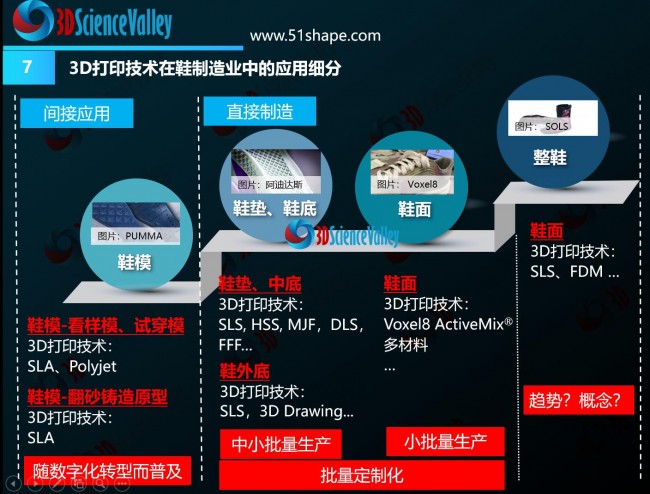
source:”3D printingAnd shoe manufacturing technology white paper
 EVA material whole shoe fast printing
According to the MIT Self-Assembly Laboratory,3D printingHas not yet become the mainstream manufacturing process, mainly limited by speed, print size and materials, they are making breakthroughs in these three areas through fast liquid printing technology. The self-assembly laboratory believes that this is a technology in the process of combining industrial materials with extremely fast printing speeds and performing precise control, which can be used for large-scale product production.
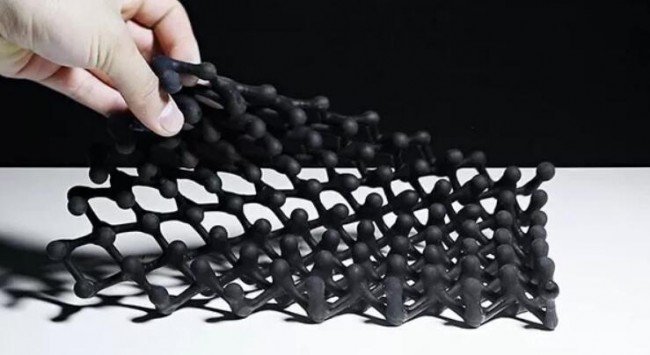
Source: MIT Self-Assembly Lab
During printing, the liquid material is extruded into the gel suspension, and the printing material is a material that has been used in manufacturing. By integrating robots and gel tanks with this technology, objects of almost any shape can be manufactured, and the printable size is not limited by the size of the printer itself. Usually within a few minutes, large-sized objects can be made from rubber, foam plastic and other materials.
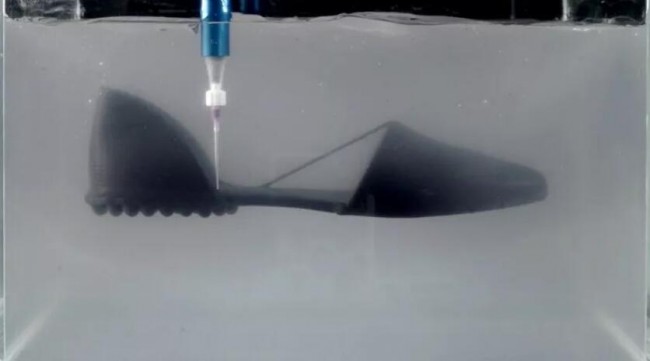
MIT showcased3D printingThe whole shoe. Source: MIT Self-Assembly Lab
Similarly, when the whole shoe is manufactured, the liquid rubber material is deposited in the gel material, and the whole shoe is manufactured layer by layer starting from the sole. It is said that the gel as a support material can be reused. The shoe printing materials are mainly made of recyclable EVA materials and flexible materials commonly used in shoe manufacturing by the project’s shoe industry partner Native Shoes.Compared with the injection molding process, this3D printingThe proportion of recyclable EVA materials in the materials is higher (up to 50%).Currently, researchers in the self-assembly laboratory are still optimizing3D printingShoes and their printing materials.
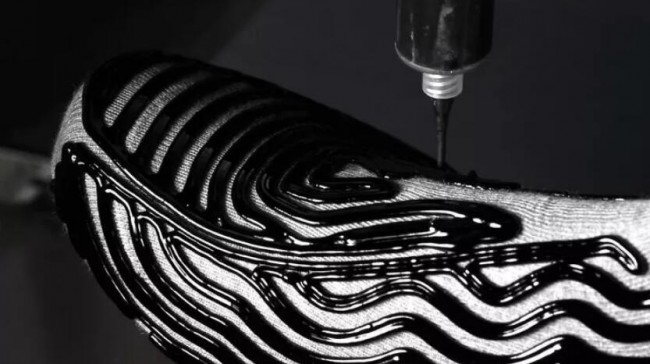
Source: MIT Self-Assembly Lab
Earlier, the MIT self-assembly laboratory passed liquid3D printingTechnology has developed a technology to print liquid rubber materials on circular knitted shoe uppers. The soft fabric is transformed into a supportive shoe upper material after printing. This technology looks very similar to the 3D Drawing liquid outsole manufacturing technology developed by BASF and Reebok. BASF provided Reebok with a liquid polyurethane material with the required rheology and reactivity. The material is directly “drawn” into the desired shape under the control of the print head and software, and the material begins to solidify during the drawing process. According to market observations from 3D Science Valley, this technology has been tried in small batches in production. The red outsole components in Reebok’s Reebok Liquid Speed sneakers are manufactured through this technology.
Source: MIT Self-Assembly Lab
In addition, the MIT Self-Assembly Laboratory has conducted research on the possibility of elastic shoe upper production in a research project of programmable materials and 4D printing technology. In this project, the researchers printed the material on a stretched elastic textile fabric. After the printing is completed, the stretched fabric is released, and a pre-programmed shape will be formed in the upper. It is said that the combination of stretch fabric and printed pattern is both flexible and stable. Digital production methods can reduce the complexity and labor required for shoe production, and digitally combine different materials to produce self-forming and adaptable shoe uppers. Although it is still unclear when the technologies in these laboratories will be industrialized, the technological exploration carried out by the MIT Self-Assembly Laboratory in cooperation with shoe manufacturers reflects the direction of shoe manufacturing technology-more flexible and efficient Digital manufacturing.
(Editor in charge: admin)
0 Comments for “Extremely high-speed, easy-to-obtain materials, the whole shoe 3D printing technology revealed by MIT”