

India’s national-level missile development strategy

Modified aerospace components
According to engineers, most of the device components produced in this way are overweight, which greatly affects performance and efficiency, and must also provide support for their complex internal geometries.
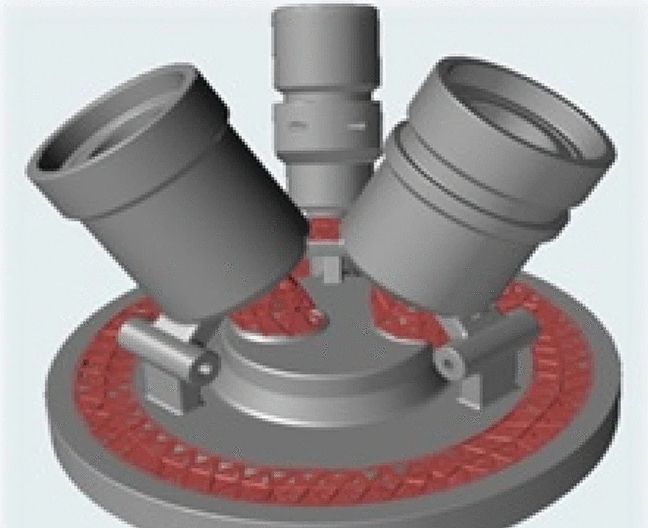
On the other hand, by switching to PBF and adopting the DfAM method, the DMRL researchers were able to produce their jet as a printing element, and its new 66.4° cross-section made it unsupported. In their transformation, the team also managed to upgrade the runners of the parts, remove materials from their low-stress areas, and introduce an ultra-light grid structure at the bottom.
In addition, during the test, the device showed a compressive strength of 500 to 600 MPa, as well as impressive hardness and tensile strength characteristics, which the research team said were superior to those of traditional melted and cast IN718.
Therefore, the researchers concluded that they have successfully demonstrated the feasibility of their 3D printing-based method and the ultimate potential for application to end fuel injectors. However, they also expressed the need for more rig testing of printed components to evaluate the functional efficiency of their parts. Further analysis can help identify better equipment optimization opportunities.

Application of 3D printing on rocket launch
The researchers’ findings are detailed in their paper, titled “3D Printing of FuelInjector in IN718 Alloy for Missile Applications”, which is co-authored by Saride Ramesh Kumar, V. Srinivas, G. Jagan Reddy, M. Raghavender Rao, and T. Raghu write.
(Editor in charge: admin)
0 Comments for “India 3D prints IN718 alloy fuel injectors, and demonstrates the potential for missile terminal applications”