

China3D printingIn 2006, NASA selected Lockheed Martin to design, develop and build the Orion aircraft for manned and unmanned missions, the agency’s latest space exploration mission. The spacecraft, which will eventually transport astronauts from Earth to the moon and back again. The Artemis program is the next step in human space exploration, and NASA’s broader lunar part of the approach to Mars exploration. The Orion crew module is expected to take astronauts in orbit beyond LEO, to the moon and back by 2022, and five years later it will deliver the next crew to the lunar orbiting station.
NASA’s Orion spacecraft has been using additive manufacturing technology exponentially.Lockheed Martin and NASA recently announced that they have completed the Orion crew and service module developed for the headhunter Artemis I mission, which used 1003D printingComponents.Of the spacecraft on the Artemis II mission, Lockheed has developed nearly 2003D printingpart.
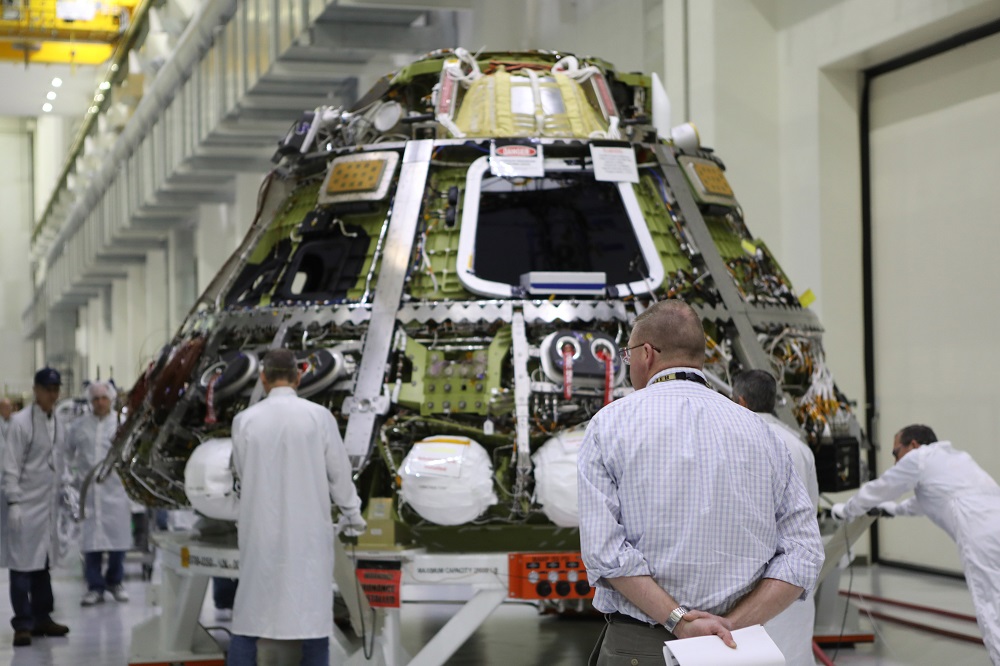
The Orion Crew Module for Exploration Mission 1, launched on NASA’s Space Launch System rocket (Credit: NASA)
Last September, NASA awarded Lockheed a contract to produce and operate six Orion spacecraft missions. The agency’s Orion Production and Operations Contract (OPOC) is NASA’s indefinite delivery, indefinite quantity (IDIQ) contract for issuing cost-plus-incentive and fixed-price orders.Initially, NASA ordered three Orion spacecraft for $2.7 billionArtemisThe third to fifth missions. Then in 2022, the agency plans to order three more Orions for missions six to eight for $1.9 billion. Up to six Orion spacecraft can be ordered through 2030 under the IDIQ contract, leveraging spacecraft production cost data for the first six missions to achieve the lowest unit price.
lockheed martinAdditive Manufacturing Lab Manager Brian KaplunacceptThe interview, the following is part of the interview:
How can additive manufacturing help create more efficient spacecraft?
“One of the roles of advanced manufacturing is to increase the cost and schedule efficiency of any of our platforms, including Orion, in a way that is at least technically parity, but in many cases can be improved. So what we did with Orion Much of our work is aimed at making spacecraft more efficient to reuse, more cost-competitive, and faster to deliver spacecraft with better technical performance. For example, our docking hatches are being done in a cost- and schedule-saving way printing; in addition, thanks to a new ESD compatible polymer, an anti-static plastic, we also provide more technical performance. AM is a tool in the advanced manufacturing toolbox that really allows us to achieve all Those three valuable points. The plan is to continue creating the AM components we already utilize and hopefully increase the number.”
We do a lot of parts that are traditionally difficult to produce, such as structural components and brackets, different parts for directing airflow or fuel containers, such as hydrogen tanks.Also, in the seats that the astronauts will use on Orion, we3D printingThere are different spacers (the part between the seat edge and the astronaut’s hip), and they vary in size depending on the astronaut using the spacer.
3D printingCan the parts withstand the harshest conditions in space?
“We fully qualify any of our spacecraft and platforms, and this is the result of years of practice. In 2011, we released the first ever3D printingThe parts, which are the parts we sent into space on the Juno mission, are now orbiting Earth. So as rigorous as we did in 2011, at the last minute in 2019 we had to go through and really qualify any part from Orion. More importantly, we will further emphasize these qualities in future manned missions, for which we are very experienced.
how do you choose3D printingpart design?
“We produce a lot of different parts for our customers that are almost in multiple shapes, so if you look at some of the new designs that are optimized for strength in terms of weight and producibility, you’ll see that they mimic bone. On your arm is like a very evolved and effective method of support. If we look at some of the structural supports that have been done, they look almost like a tree or a skeletal structure, which is a very unique form. But now that people have been trained in AM, we’ve noticed that there are many more technically complex designs. Some of the ESD parts we make for Orion are nearly impossible to implement any other way.
3D printingIn what ways has the cost of the spacecraft been reduced?
“We’re aiming to get costs down to 50 percent. Last year, we printed around 6,500 parts across the space sector. Recently, we even used AM technology to develop models for testing, such as the toilet that will be used on Orion. We worry about thisareaDisturbed, so we printed the entire toilet mockup and put it in the aircraft. The size of this toilet is 2 feet in diameter and 3 feet high, so it is very large to produce. “
Lockheed in3D printingHow do you consider sustainability when creating your work?
“werightTake great pride in the sustainability of technology. Our polymer products can be recycled and reused as needed, the powder bed process is very efficient, and the industry as a whole is considered very sustainable and cost-effective from a materials standpoint. Some of the waste in our addition process can be below 5%. When you compare it to some subtractive and traditional manufacturing applications, the numbers flip completely, producing 90% waste. “
Can you tell me how many AM parts Orion uses?
“We made 200 components for the Artemis II Orion spacecraft. I had over 100 prints with Artemis, compared to 4 in previous versions3D printingpieces.This shows that only after a generation of spacecraft will we be able to3D printingThe number of parts is doubled.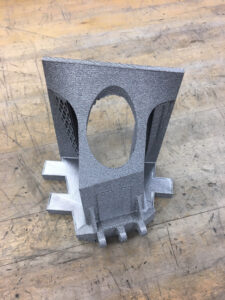 3D printingTitanium Parts” alt=” for NASA’s Orion spacecraft3D printingTitanium parts” width=”225″ height=”300″ />
for NASA’s Orion spacecraft3D printingTitanium parts (Image credit: Lockheed Martin)
What can we expect during the Artemis II mission scheduled for late 2020?
“Our next mission will be to launch Orion on the Space Launch System (SLS) rocket, which will be the largest launch vehicle ever built. Next year, we can expect the unmanned service module to enter lunar orbit and stay there One month, a lot of inspection of all modules, this will be the first launch of the new rocket. Once back to earth, we will recycle it, disassemble it, see what is reusable, what needs to be improved, and in the meantime, We’ll be ready for the Artemis II mission, with the first astronauts flying in 2022. Artemis III will then take astronauts to the Gateway, a small space station in lunar orbit in 2024, and land from there, which will allow The first woman and the next man to land on the lunar surface.
Are there more engineers interested in AM technology applications?
“We have witnessed many students and academics contributing to the field of design, who have entered our engineering and production ranks and have done a lot of previous work in the field and have come up with new ideas and new ideas to be able to take advantage of The capabilities of the tools we now offer.”
As an engineer, how did you change your mindset to move from a subtractive to an additive perspective?
“When we start designing parts that can only be made through the additive manufacturing route, we start to break the threshold, so in the past, we would take products that were designed for conventional machines and then transition them into the additive manufacturing world”, “Today, we Generative design is being done, and the only way we know of that can be done with AM. There are parts of the spacecraft that cannot be done with other techniques, such as hollow ones.”
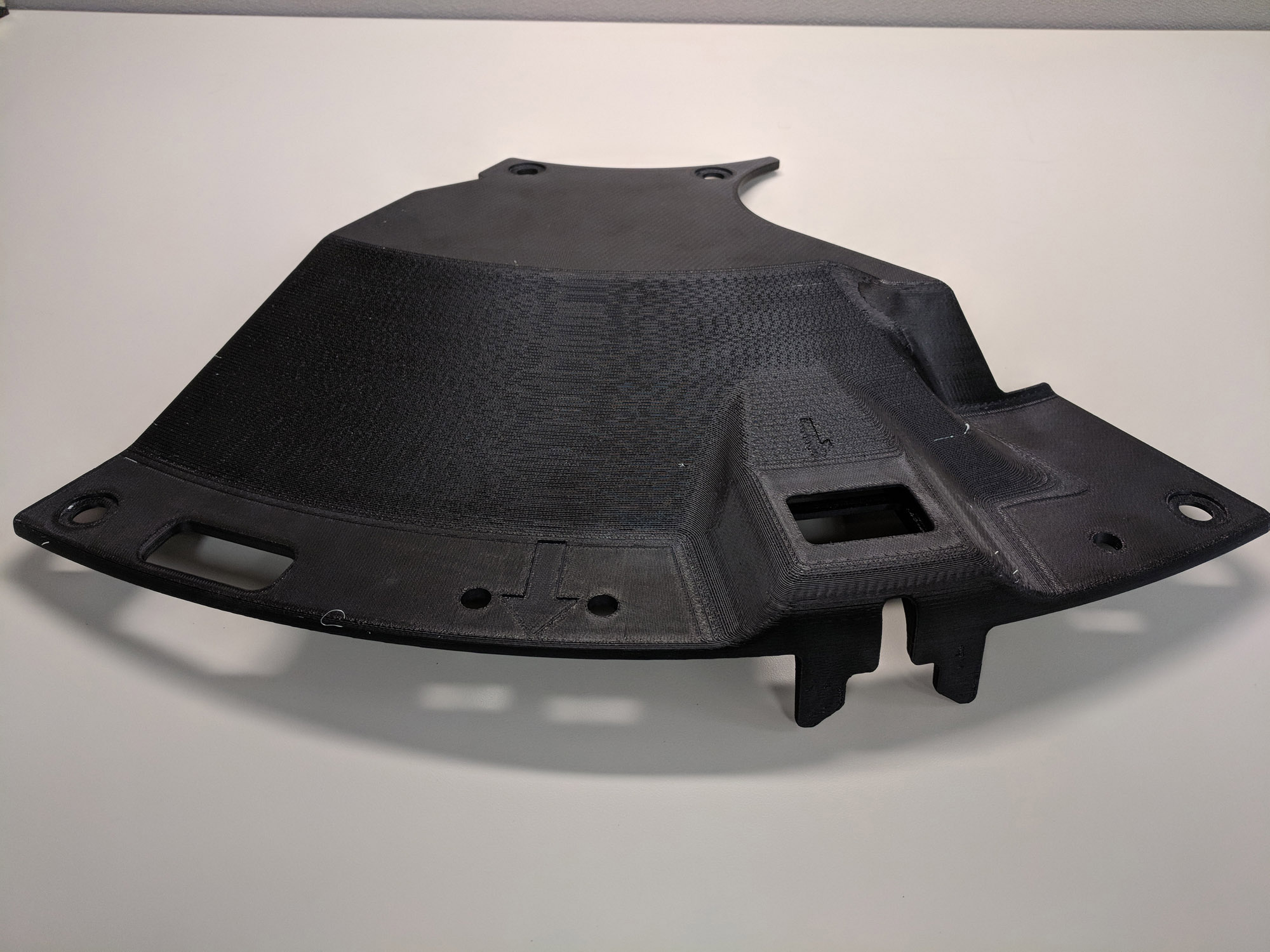 3D printingThe Orion docking hatch” alt=” 3D printingThe Orion docking hatch” width=”620″ height=”465″ />
3D printingThe Orion docking hatch (Image credit: Lockheed Martin)
what lockheed is using3D printingTechnology?
“We made for Orion3D printingThe technical variety of parts is very wide, dockingcabinThe covers are made on Stratasys FDM printers, but we also use metal powder bed technology and polymer technology in many forms.”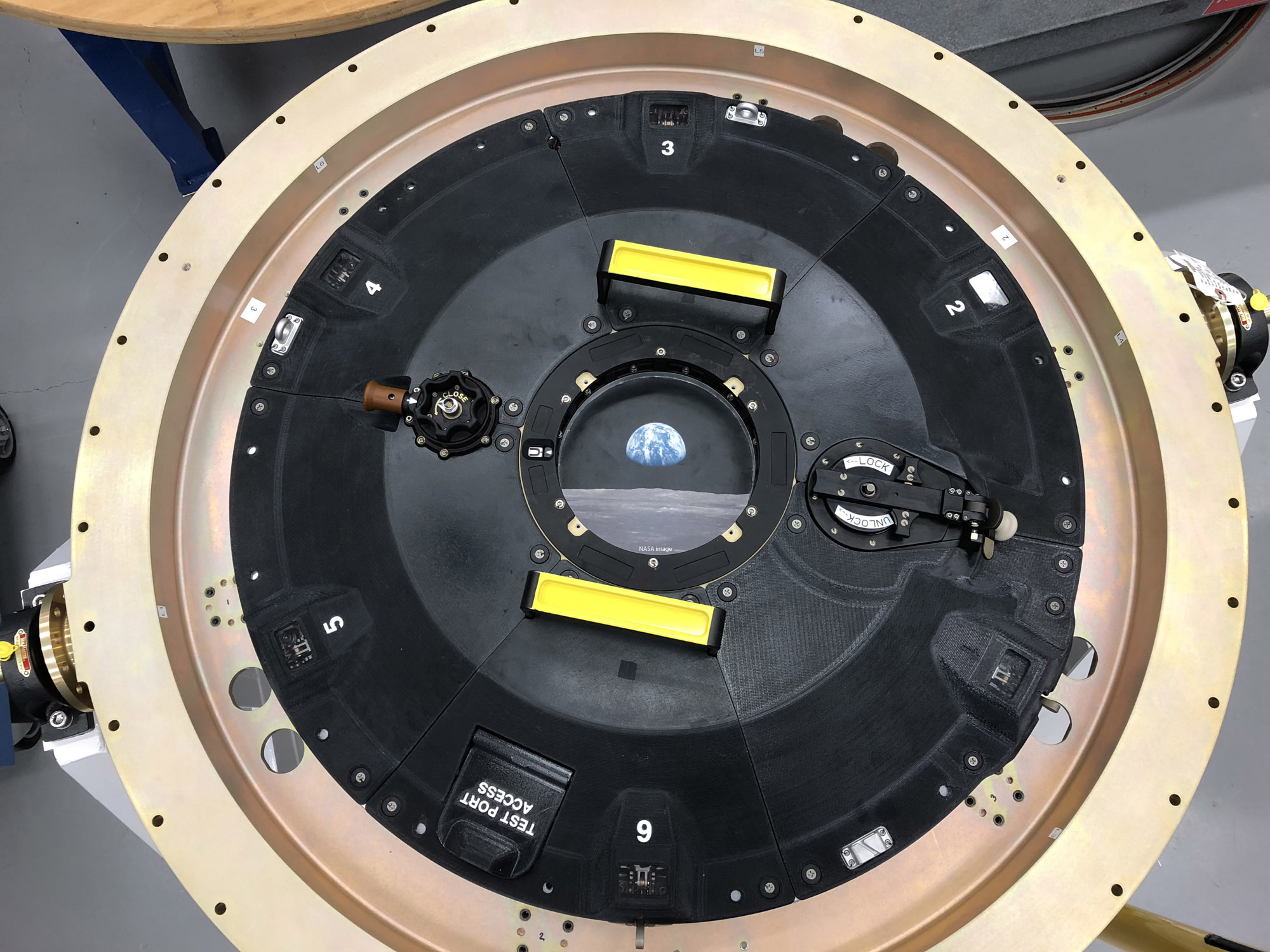 3D printingThe Orion docking hatch is made of PEKK thermoplastic” alt=”3D printingThe Orion docking hatch is made of PEKK thermoplastic” width=”620″ height=”465″ />
3D printingThe Orion docking hatch is made of PEKK thermoplastic (Image credit: Lockheed Martin)
So, what do you think the future holds for this aerospace company?
“We just signed a long-term production contract with NASA for six spacecraft missions, so I believe our goal is to make more for the spacecraft.3D printingComponents.The focus of the contract is to significantly reduce eachSpacecraftcost, primarily through the use of reusable Orion crew modules and systems, the use of advanced manufacturing techniques, the bulk procurement of materials and components, and the accelerated pace of missions. I think additive manufacturing has a big role to play in reducing costs and increasing the frequency we fly. “
A complete Orion crew module module at NASA’s Kennedy Space Center (Credit: Lockheed Martin)
With work on the Artemis I and II rockets well underway and core stage assembly almost complete in Michoud, Orion will leave Lockheed for testing at NASA’s Stennis Space Center near St. Louis Bay, Mississippi.
China3D printingNet original article!
(responsible editor: admin)
0 Comments for “Lockheed Interview: Orion spacecraft has 200 3D printed components”