

as
biology
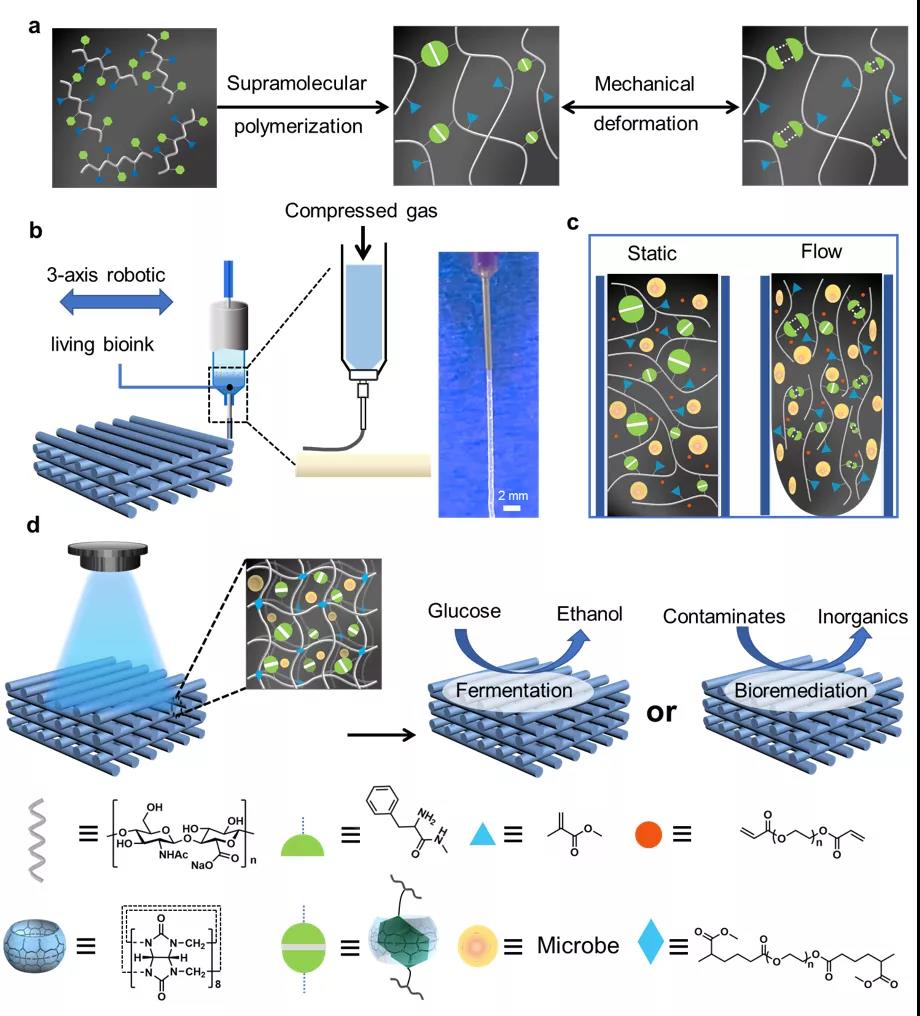
Catalysts, microorganisms can perform energy harvesting, sensing, repairing and driving through whole-cell catalysis or multi-cell cooperation, with high efficiency, mild conditions, and high selectivity. The traditional microbial cell-to-cell collaboration method, due to the different growth rates between cells, can easily lead to the growth and development of microorganisms and the loss of efficiency.Recently, the State Key Laboratory of Materials Chemical Engineering of Nanjing University of Technology has developed a new strategy to control the spatiotemporal layout of microorganisms by preparing novel supramolecular hydrogel materials as carriers, using3D printingThe method integrates microorganisms with them, realizes the spatial control of microbial cells, and maximizes the efficiency of biological processes. The related results were published in the well-known nanomaterials journal “Small”.
“The microbial flora in nature often coexists with each other. Using this feature, we can develop artificial multicellular systems for biomanufacturing. However, in the actual situation in the laboratory, if only these two microorganisms are placed together bluntly. , they will ‘pinch each other’, causing one to lose another. To prevent this, we wondered if we could build a ‘
House
‘, let them ‘safely’ stay in their ‘room’, and still work together with each other? “Professor Yu Ziyi from Nanjing University of Technology introduced, the research team thought of3D printingThe method, “3D printing can place them in a fixed position, and 3D printing can also expand the specific surface area of contact and improve the efficiency of biocatalytic reactions.”
To generate the printable matrix, the research group developed a novel supramolecular hydrogel material composed of functionalized hyaluronic acid and cucurbituril as the host. Supramolecular hydrogel materials are not only suitable for microbial immobilization and growth, but also can be used as bioinks for 3D printing. “This type of hydrogel is very similar to the toothpaste in our daily life. The microorganisms stay in the special ‘toothpaste’, and the 3D printing equipment can extrude the ‘toothpaste’ to form a pre-designed structure, which is used to prepare cells with uniform distribution and Positionable 3D structures with high maintenance and strain immobilization.” The study showed that microorganisms in 3D lattices can maintain high cell viability and metabolic activity during fermentation and bioremediation.
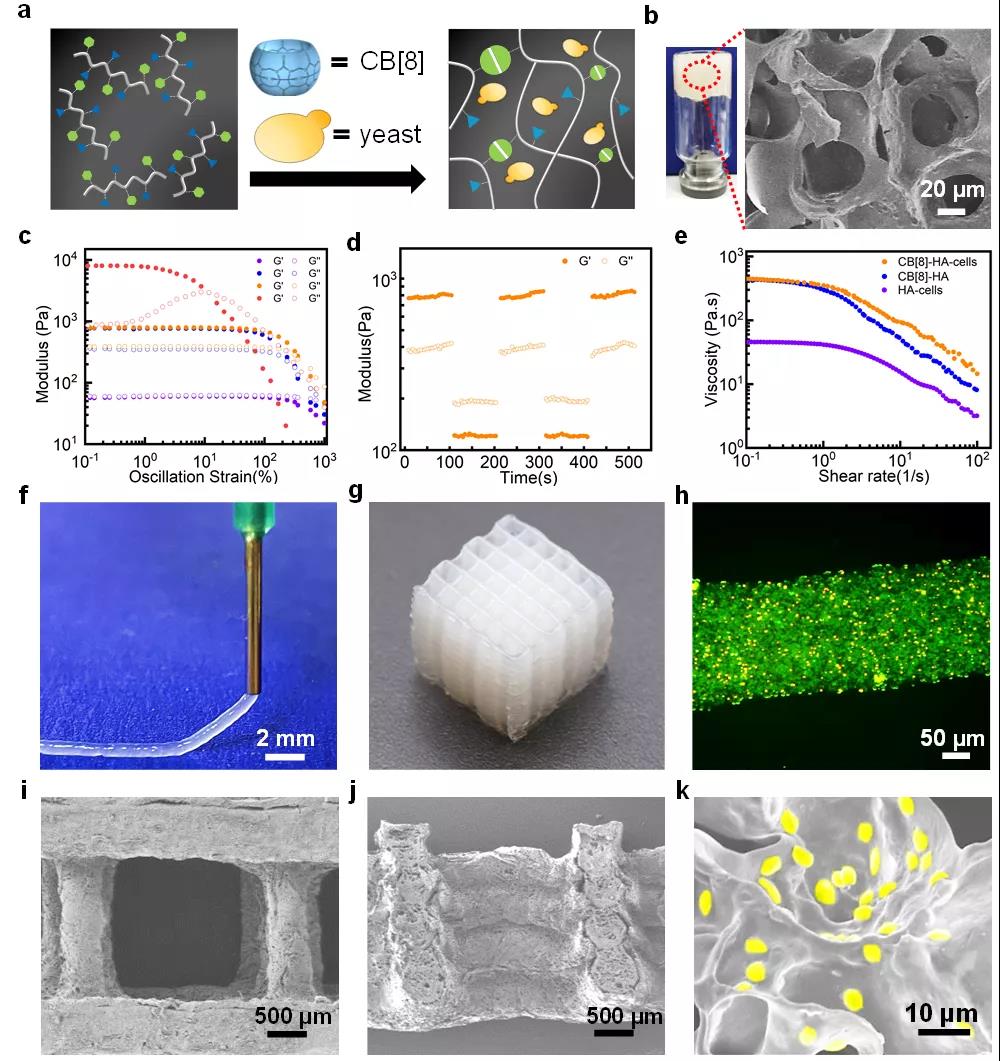
It is reported that the catalytic efficiency of the living material is increased by 80% and 50% respectively compared with the use of a single microorganism and a simple mixture. The overall progress of this technology is in a state of “running side by side” with the international advanced level. This research can not only be used to strengthen the biocatalytic ability of microorganisms, but also can be applied to the bacteria-algae symbiotic system to absorb carbon dioxide and improve the carbon sequestration level of microorganisms, which is a good way to adopt green technology. Biomanufacturing provides an alternative technological approach to carbon neutrality.
(Photo courtesy of Nanjing University of Technology)
(responsible editor: admin)
0 Comments for “Microorganisms “pinch each other” to “collaborate”, 3D printing technology increases catalytic efficiency by more than 50%”