

On January 10, 2022, researchers at the University of Minnesota, Twin Cities (UMTC) have developed a fully 3D-printed organic light-emitting diode (OLED) display similar to the ones found in commercial TVs and smartphones.
This flexible 64-pixel display uses a custom squeeze3D printerManufactured, and equipped with a jet-printing plug-in for producing active layers, it has been shown to be able to display text and emojis at low resolution.With further research and development, the team believes that the displays they produced in the lab could serve as a low-cost alternative to OLEDs, even on desktops at home3D printerIt will also be possible to create them.
“OLED displays are typically produced in large, expensive, ultra-clean manufacturing facilities,” said study leader Michael McAlpine. “We wanted to see if we could condense all these basic components and print an OLED display on our desktop 3D printer, The printer is custom made and costs about the same as a Tesla Model S.”
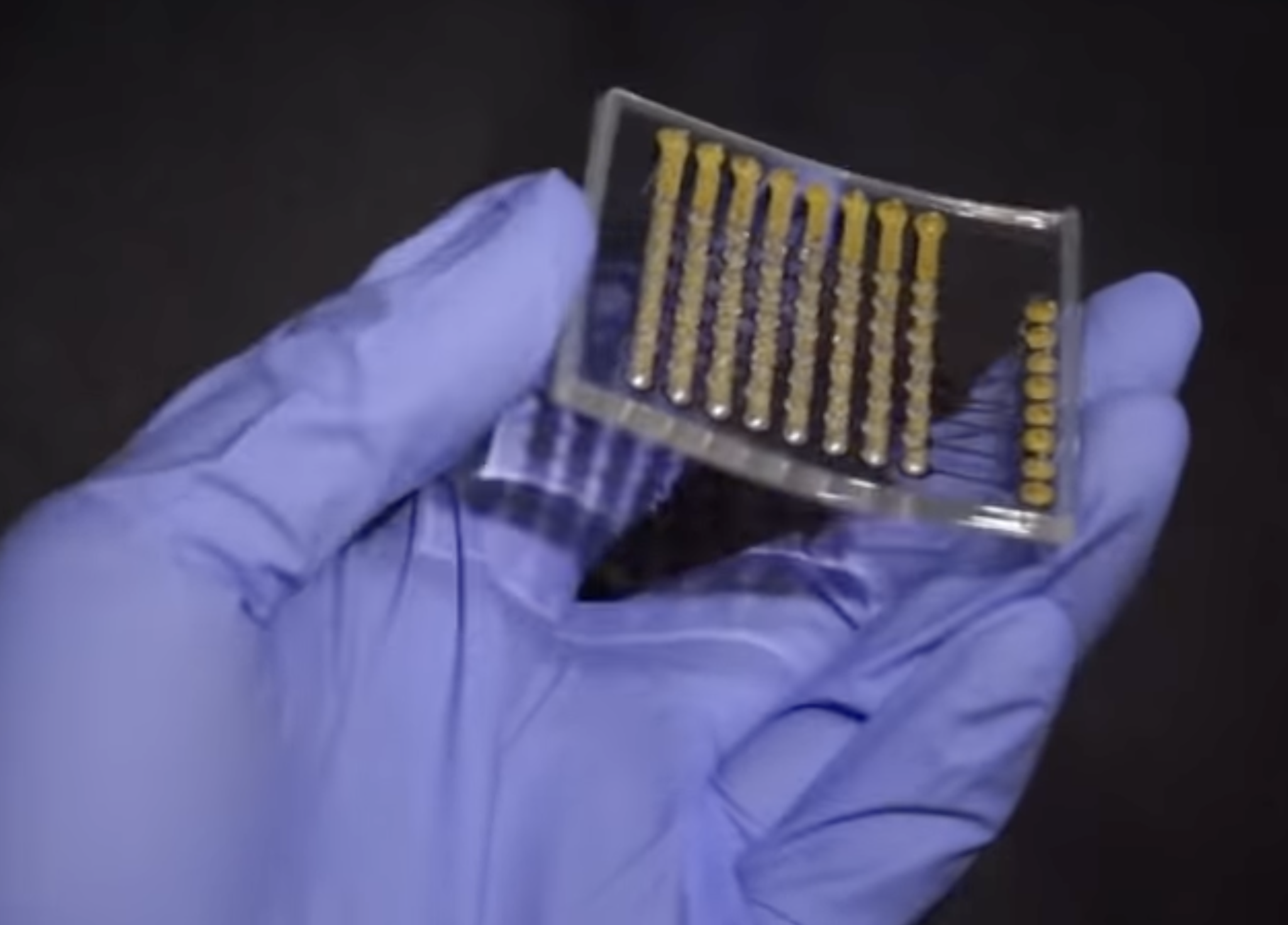
The researchers’ findings are detailed in their paper titled “3D-printed flexible organic light-emitting diode displays,” co-authored by Ruitao Su, SungHyun Park, Song Ih Ahn, and Michael C. McAlpine.
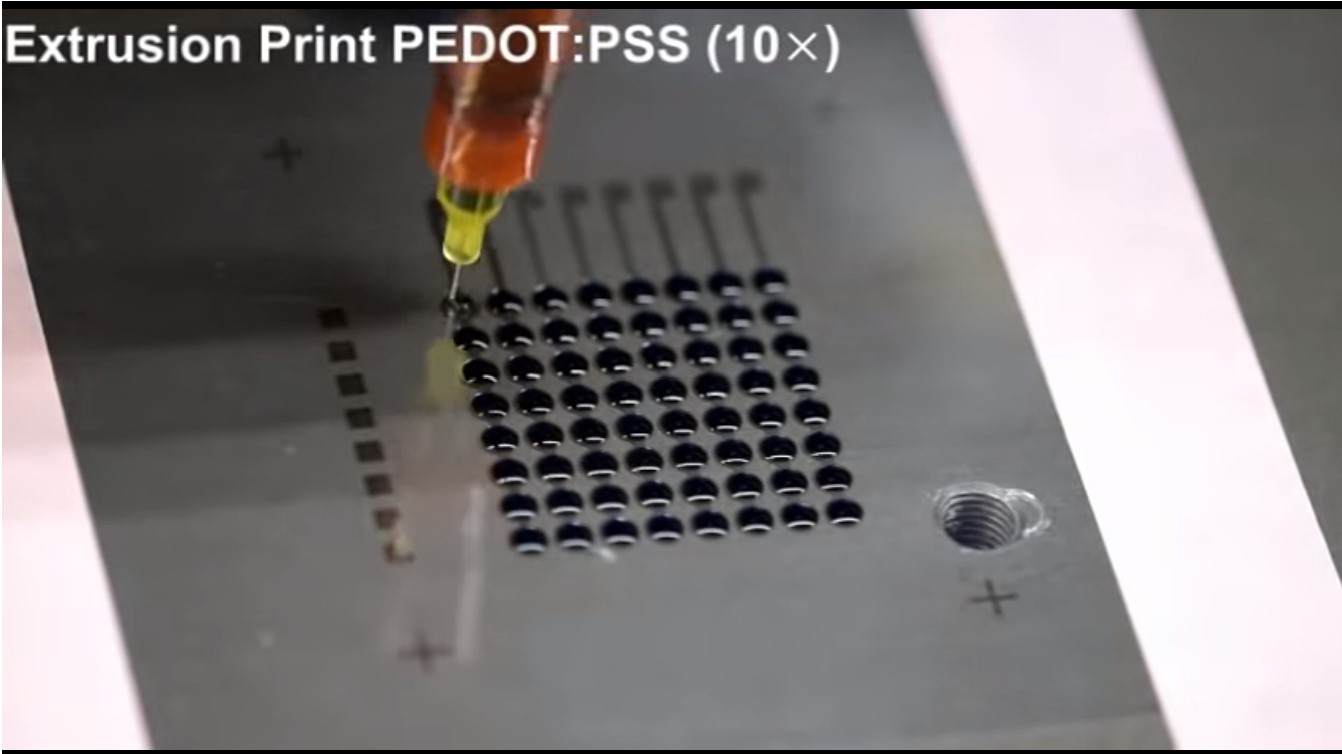
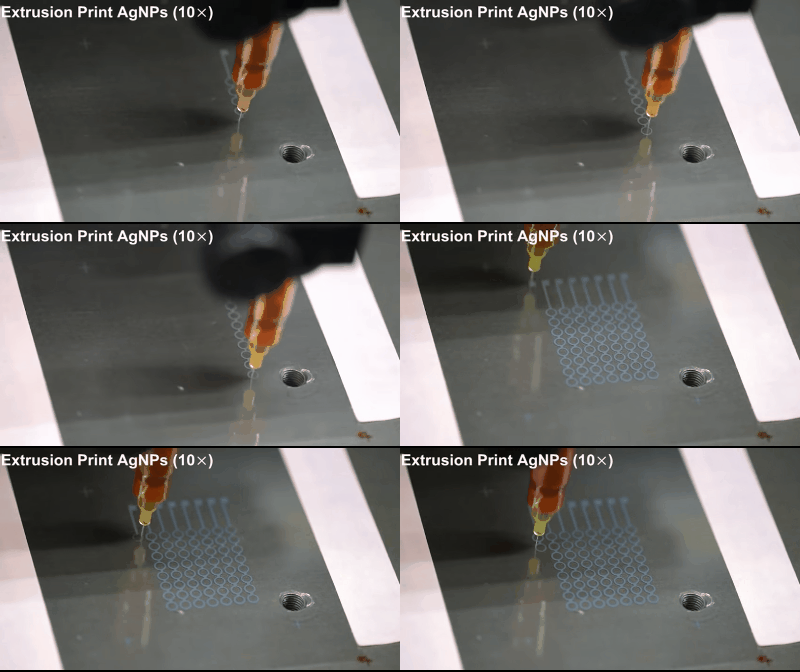
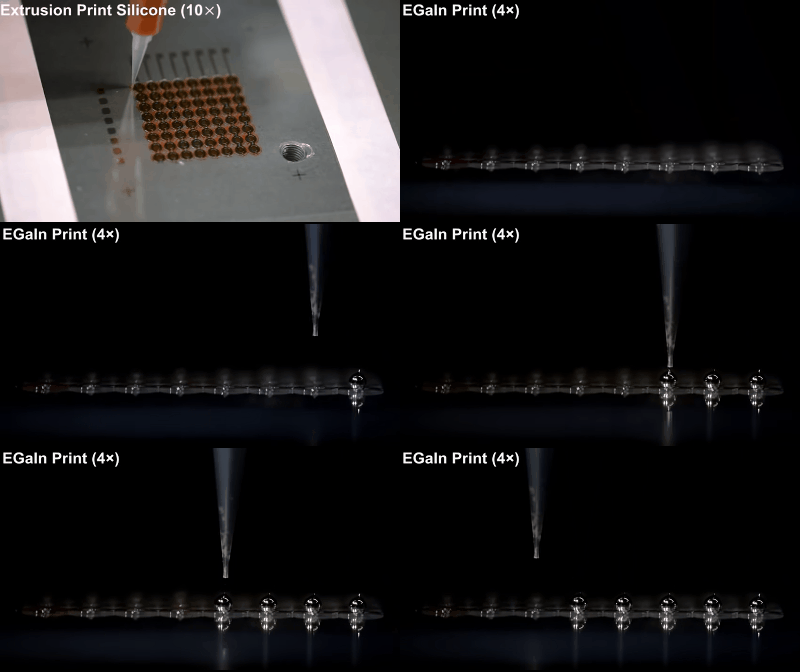
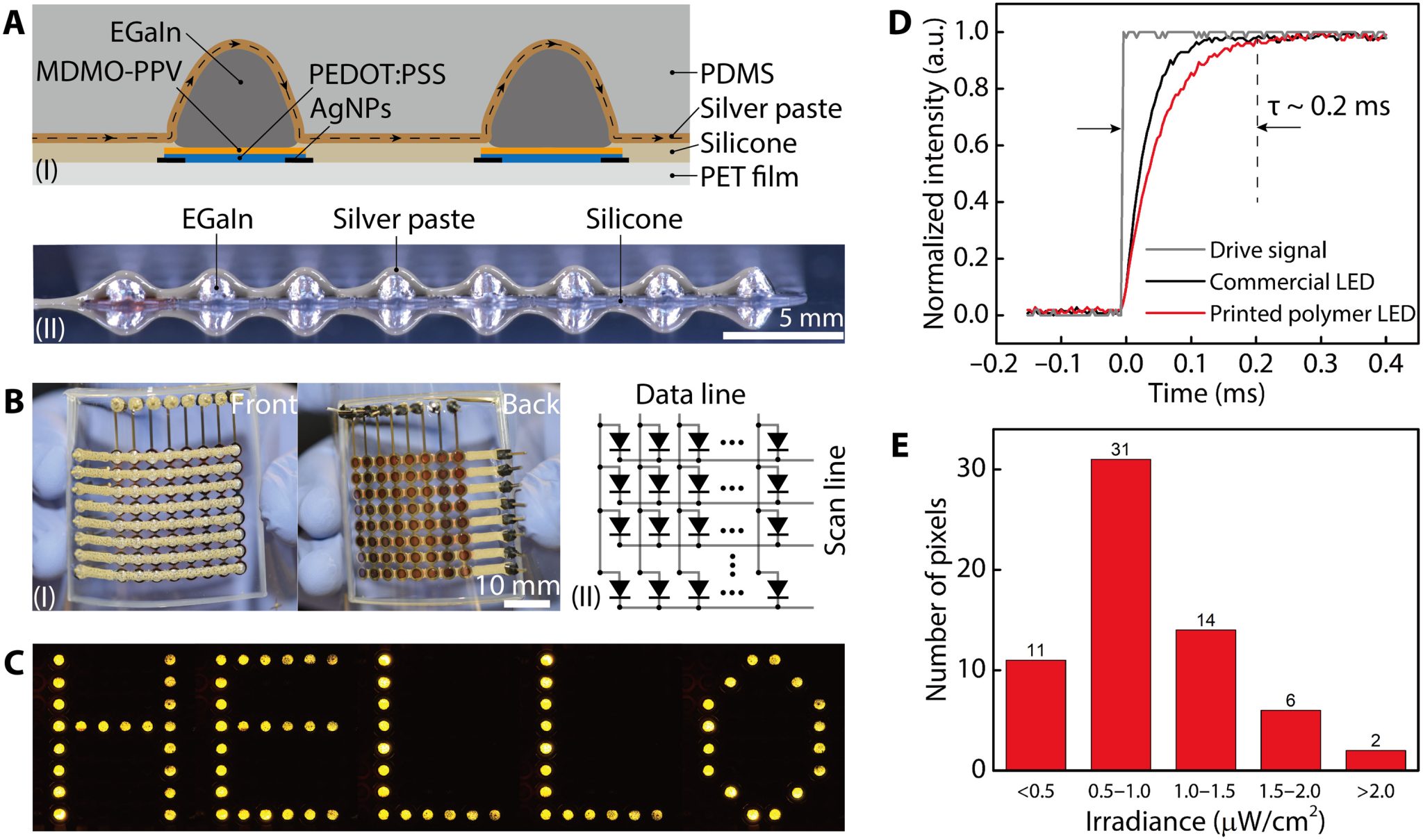
The team’s unique OLED display consists essentially of six layers printed on a flexible PET film, consisting of a cathode sitting on an insulating layer of silicone, a conductive polymer, and a set of interconnecting wires at the bottom. Interestingly, during production, the researchers found that the surface of the jet-printing device gave it a controllable thickness, while allowing its layers to be tightly interconnected.
Once ready, the engineers tested their prototype, with each pixel working flawlessly in an 8 x 8 grid with anodes and cathodes connected to each other along the same columns and rows. In fact, the team says their device exhibits a very impressive pixel response time of just 0.2 milliseconds, which is in the same order of magnitude as an LED and one faster than a typical LCD.
The team did notice some pixel changes when scanning with 10 milliamps of current, but they say this can be reduced by minimizing any deviations in the thickness of their surface layers. Looking ahead, the UMTC staff are now working on developing higher-resolution, higher-brightness displays, and in the future, they say their method could also be applied to create photovoltaics or sensing devices.
McAlpine added: “The highlight of our research is that all fabrication is built-in, so we’re not talking about some unrealistic vision 20 years from now. This is what we’ve actually created in the lab. It’s not hard to imagine that in just a few short years you could be printing all kinds of displays yourself using a small portable printer at home or on the road.”
The field of electronic 3D printing may still be in a relatively early stage of development, but there are already signs that the technology behind it is starting to take significant steps toward commercialization.For example, Nano Dimension, one of the early leaders in the market, has been iterating on its proprietary electronic3D printing technology, launched its new DragonFly IV machine late last year.
(responsible editor: admin)
0 Comments for “New 3D printed flexible OLED display unlocks new possibilities for future low-cost screens”