

China3D printingNet January 14, Associate Professor Li of the Department of Mechanical Engineering at Virginia Tech and State University (VT)Ling(Ling Li) led the research and development3D printingFlexible scaly armor inspired by a group of marine mollusksStone turtles.
The research, published in the journal Nature Communications, aims to improve the rigid structures used in artificial armor, which often compromise flexibility and maneuverability.Therefore, using parametric calculation models and multi-material3D printing, You can create flexible, scalable ceramic armor components.
Professor Li explained: “Most molluscs have a single hard shell, such as abalone, or two protective shells, such as clams. ButStone turtlesThere are eight mineralized plates covering the body and surrounding its bottom. It has a small fish-scale belt assembled together like fish scales, providing flexibility and protection. “
Researchers include members of the Massachusetts Institute of Technology, Harvard Medical School, California State University, the Max Planck Institute for Colloids and Interfaces, and the Wise Institute.
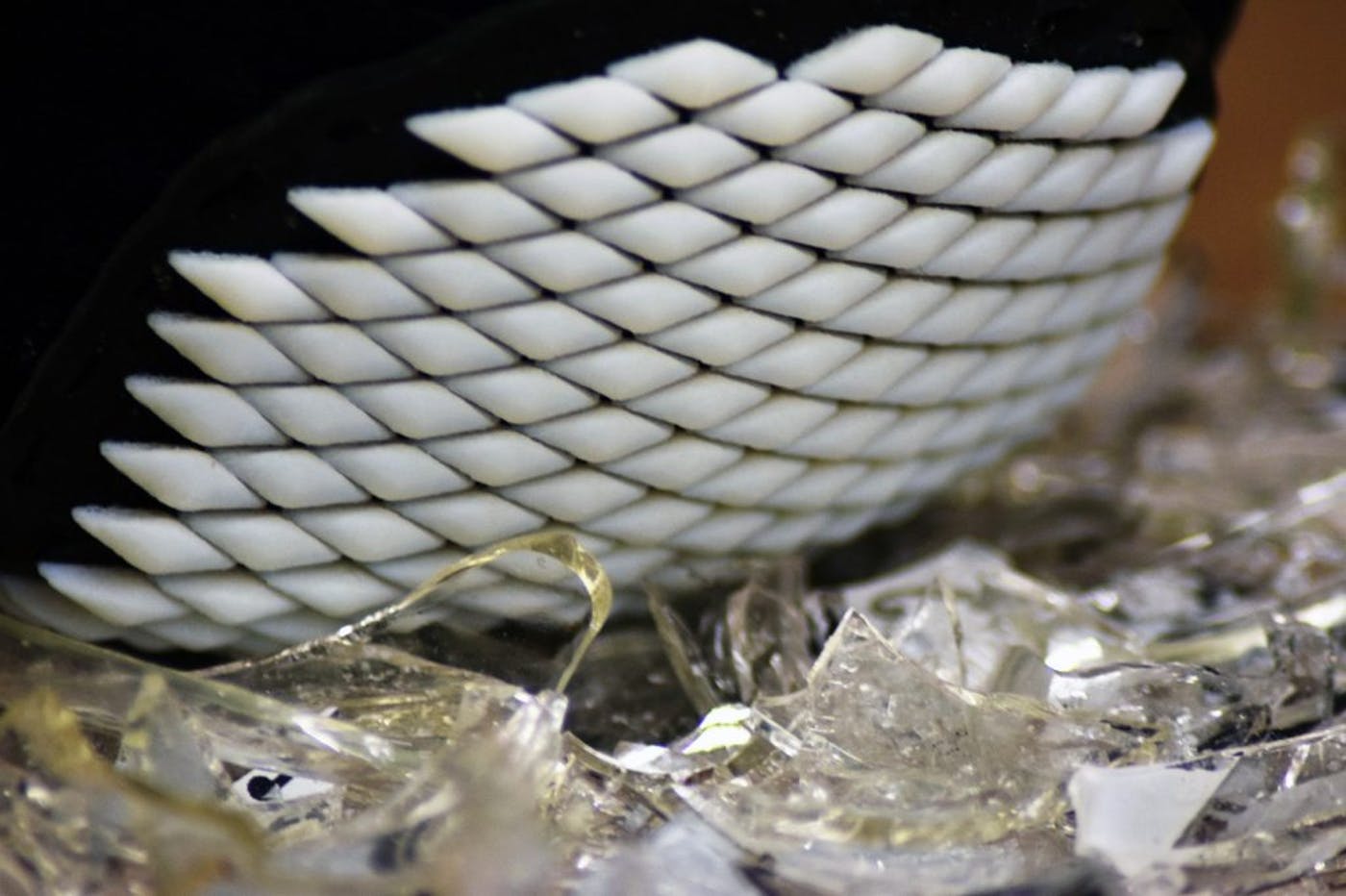
3D printing
‘S flexible armor was inspired by stone turtle mollusks on broken glass” alt=”
3D printing
‘S flexible armor is inspired by stone turtle mollusks on broken glass” width=”620″ height=”413″ />
3D printingThe flexible armor is affected by the broken glassStone turtlesInspired by mollusks. Picture from Virginia Tech.
3D printing“Belt Ratio” armor
Stone turtles
The species has hundreds of tiny mineralized scales arranged in soft bands around their overlapping crusts. According to the researchers, this ensures the flexibility of movement and the protection of its underlying software, and is an excellent model for multifunctional armor design.In addition, the research team pointed out that prior to this study, theStone turtlesThe scales of the waistline were studied in depth.
Professor Li said: “We have studied this kind ofWaist Scale, We quantified its internal microstructure, chemical composition, nanomechanical properties and three-dimensional geometry.We researched multipleStone turtlesThe geometric changes of scales between species, and how the scales are assembled together by 3D tomography analysis. “
As a result, a parametric 3D modeling method that replicates the geometry of a single scale has been developed. This is used to assemble a single scale unit on a flat or curved substrate, which can then be additively manufactured.Prior to this, VT scientists developed a3D printingThe method of piezoelectric materials, which convert mechanical energy into electric current.
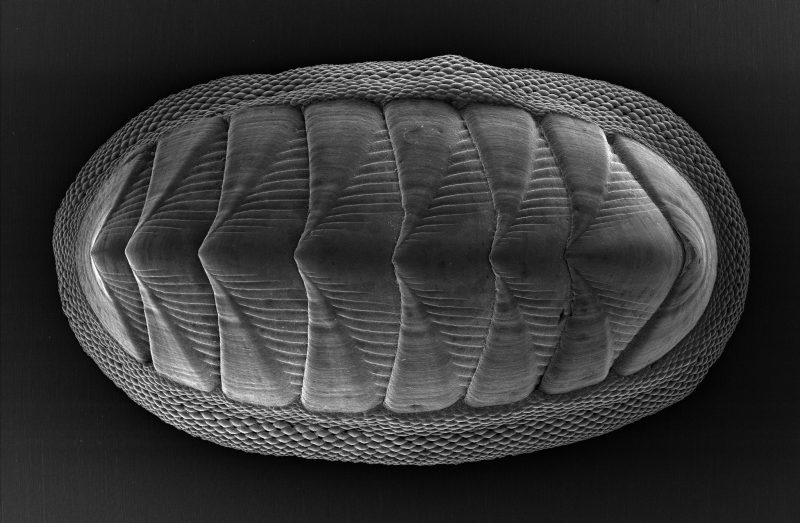
Stone turtlesThe mollusk is about 1-2 inches long, has a series of eight large plates, and is surrounded by smaller, more flexible scales.Mollusks are3D printingThe inspiration behind the armor. Picture from Virginia Tech.
Protect the flexible armor system
3D printingThe rigidity of the armor comes from the layout of the ruler, and the layout of the ruler has been further emphasized using the calculation model. This is said to reveal how the scaled armor interlocks and becomes rigid when the external load reaches a critical value. When it comes into contact with force, the scales converge inward to form a strong barrier.
when3D printingWhen the scutes are not under force, they can move to each other to provide different amounts of flexibility depending on their shape and location. Professor Li added: “With the help of these physical prototypes with controlled sample geometry and size, the team conducted direct mechanical tests on them under controlled loading conditions.”
After these tests, the researchers concluded that the dual protection-flexibility properties of the biological armor system will be suitable for production3D printingProtective equipment, such as knee pads.
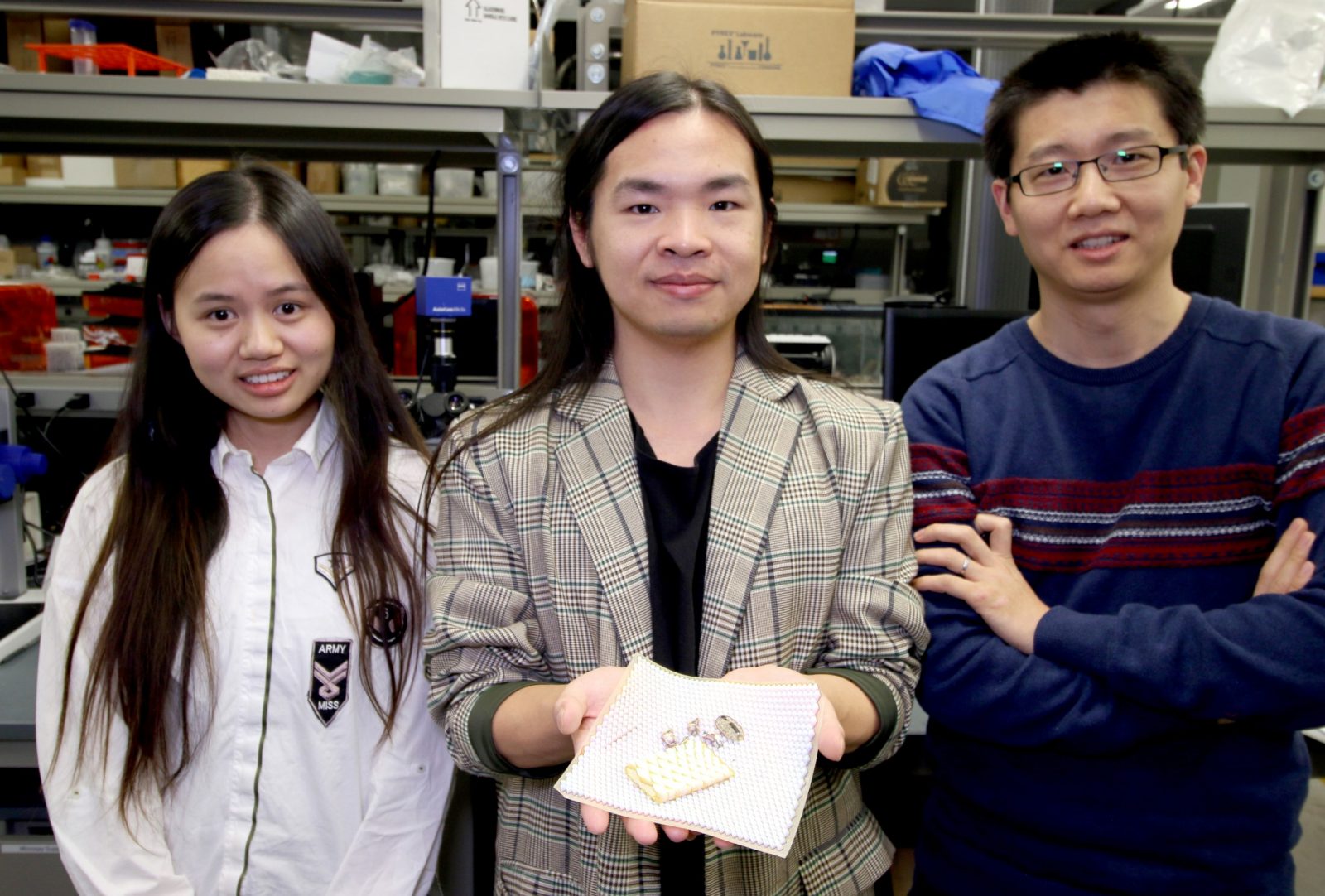
Assistant Professor of Mechanical Engineering Li Ling (right) and doctoral students Ting Yang (left) and Dengfei (邓志飞) as the center, holding3D printingArmor. Picture from Virginia Tech.
China3D printingNet original article!
(Editor in charge: admin)
0 Comments for “Researchers have developed 3D printed armor inspired by mollusks”