

China3D printingNet, December 29, researchers from Finland and Estonia in the recently published “Double-layer polymer carrier with electrospinning surface modification by electrospinning for potential wound care applications.” The electrospinning technology in polymer wound care is being explored.
For this study, the researchers used a double-layer carrier technology that combines a mixture of polyvinyl alcohol (PVA) and sodium alginate (SA).These carriers are cast by solvent and then electrospun or3D printingPrepared. In addition, the battery’s safety and behavior, as well as physical and adhesive properties were characterized and tested.
Because wound dressings can eventually heal, they can also prevent bacterial infections. Today, carriers are produced through artificial and natural polymers and are designed to provide the following functions:
1. Long-term function
2. Humid rehabilitation environment
3. Tissue regeneration
4. Prevent additional damage
5. Reduce the inconvenience to patients
According to China3D printingThe net understands that the mechanical and adhesive properties of wound dressings determine their production capacity and durability after storage and use. In addition, they have biologically active ingredients and/or active pharmaceutical ingredients (API) (such as antibiotics, anti-inflammatory agents, and vitamins). And growth factors) bioactive wound dressings are also constantly being developed.Here, the wound dressing is passed3D printing, Produced by electrospinning and solvent casting, this method provides a “structurally stronger” film. Electrospinning is environmentally friendly and is becoming more and more popular among researchers. 3D printing(Especially bioprinting) can be used for:
1. Tissue engineering
2. Customized medical equipment
3. Drug delivery system
The researchers said: “The purpose of this research is to study the combined technology of manufacturing dual-layer carriers for API delivery.” The designed surface layer modified system is based on a polymer blend of PVA and SA. The electrospun layer is added to the surface of the solvent cast film of the same composition.The physicochemical, mechanical, and adhesive properties of the carrier were characterized, and compared with those with3D printingSimilar double-layer supports with macroporous surface layers were compared. “Use a film applicator to cast the solvent cast (SC) film from solution A onto a transparent copier film or aluminum foil, while using an eS-robot© electrospinning machine to prepare a nanofiber (NF) mat from solution A. Extrusion type Biobots 1 in semi-solid 3D printingOn-board execution3D printing. To test the sustainability of the double-layer cross-linked vector and the cells on the cross-linked SC membrane, the MTS cell proliferation assay was used, using a 24-well plate with a cell crown insert.Electrospinning speed is slow and the degree of fiber fusion is low. After cross-linking, there is no “visible change” in the fiber.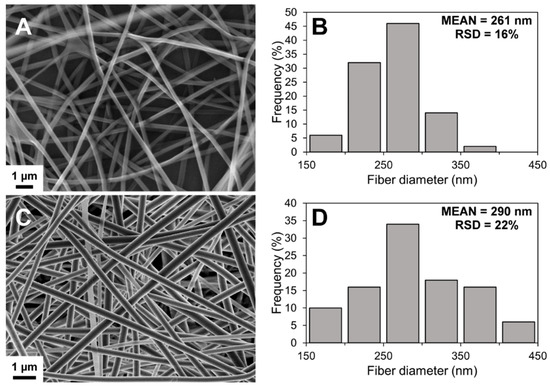
Scanning electron microscope (SEM) image (A) and fiber diameter histogram (B) of non-crosslinked solvent casting/nanofiber (SC/NF) carrier, and SEM image (C) and fiber diameter histogram of crosslinked SC/NF Figure (D) Carriers with mean and relative standard deviation (RSD) values (n = 50).
will3D printingThe mat is extruded onto a plastic liner with a honeycomb filling pattern, which is “clearly visible” after manufacture.The researcher said: ” 3D printingThe pad contains a patterned matrix with lemon-shaped holes, approximately 990×1620 µm in size (n = 8). “
Schematic diagram of the preparation of the double-layer carrier designed for wound care. Key: HV-high pressure; 3D-three-dimensional; PSI-pressure (pounds per square inch).
By using double-layer carrier equipment, the research team was able to make the following adjustments:
1. Physical properties
2. Bioadhesion characteristics
3. Call carrier interaction
“Inkjet printing experiments show that the double-layer carrier using electrospun nanofibers has uniform liquid absorption characteristics. In addition, surface modification provides for the manufacture of advanced drug delivery systems with active substances (for example, drugs and/or biologically active substances) Develop a platform so that wound healing or drug delivery can be enhanced through various routes of administration.Further research aims to develop multi-layer wound dressings with biologically active substances and conduct under more biologically relevant conditions. The relationship between the properties of the carrier and the composition of the nanofiber layer will be evaluated, and the physical properties and stability of advanced drug delivery systems will be studied. In addition, biodegradability and specific biological activity behavior tests will be conducted to evaluate the clinical applicability of the double-layer carrier and the drug. “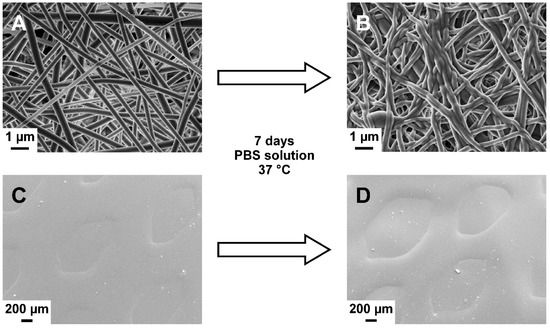
(A, C) Before and after (B) Crosslinking solvent casting/Nano fiber (SC/NF) (A, B) and solvent casting/ 3D printing(SC/3D) (C, D) Scanning electron microscope (SEM) image of the carrier, D) Soak in phosphate buffered saline (PBS) solution at 37°C for 7 days.
(Editor in charge: admin)
0 Comments for “Scientists study 3D printed electrospinning for wound care”