

China3D printingNet, October 31, when metal and other parts are exposed to salt air, corrosion is inevitable, especially under normal conditions, such as warships and other hardware. In order to fight against the harshness of nature, the Department of Defense (DoD) signed a R&D contract with 3D Systems in the “Design Guidelines for Corrosion Performance of Nickel Alloy Direct Metal Printing.”
Although 3D Systems is recognized as a leader in the field of 3D solutions and workflow systems, the US Department of Defense chose them as a contract because they have the ability to collect corrosion data and then develop new products through direct metal printing (DMP); practically On the other hand, due to the excellent quality control of the parts and the low oxygen content, the technology and expertise of 3D Systems is considered an ideal choice for the manufacture of ammunition and shipbuilding.
In this contract, 3D Systems will also work with Xingang News Shipbuilding and Northrop Grumman Innovative Systems, as well as corrosion experts at the University of Akron. The goal is to reduce the maintenance cost of the Navy’s offshore systems. As a material science expert, the 3D Systems team has a good understanding of metals and their corrosion.
Dr. Jared Blecher, head of aerospace and defense engineering at 3D Systems, said: “We believe that additively manufactured parts can be post-processed to limit corrosion in saltwater environments.
Through our research and development efforts, the corrosion rate of additively manufactured parts will be quantified, so end users will have better data to decide when to inspect or replace parts. In addition, we will explore the value of heat treatment to help improve the mechanical properties of parts, reduce corrosion and ultimately reduce costs. “
With the joint efforts of 3D Systems, Newport News Shipbuilding and Northrop Grumman Innovation Systems, 240 tests with four different surface finishes were carried out for the corrosiveness of nickel alloys.
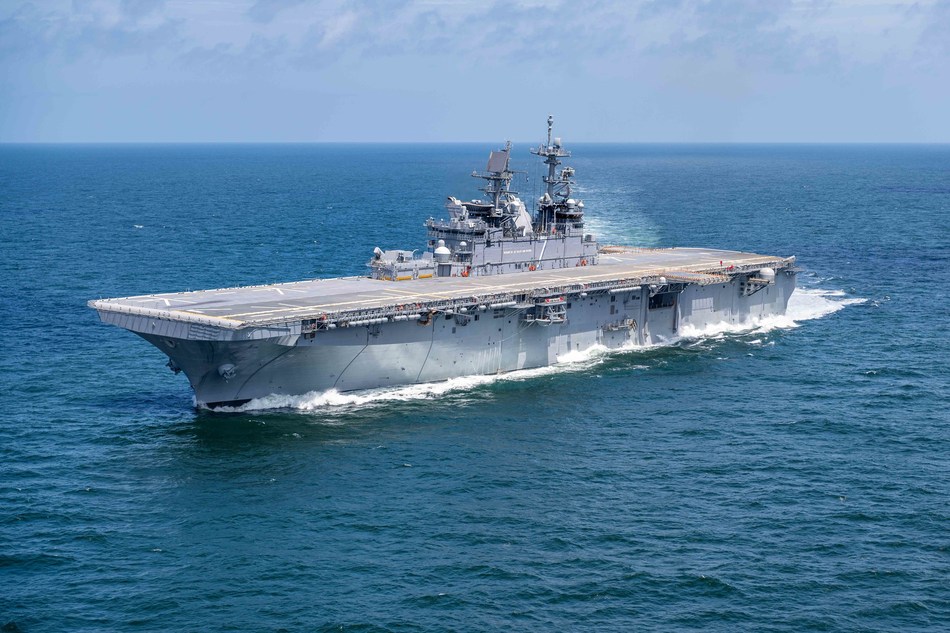
The Corrosion Guide will explore how metal additive manufacturing has a positive impact on shipbuilding and ammunition manufacturing. (Picture provided by Huntington Ingalls Industries)
Researchers will also use various heat treatments to evaluate the following:
crack
.Stress corrosion cracking
.Galvanic corrosion mode
They will also simulate:
. Surface condition range
.Elemental microsegregation
“There is no doubt that the Department of Defense has a great need for rapid identification and certification of DMP and other additive manufacturing processes that use nickel alloys and other metal materials. The performance design guidelines created by 3D Systems and its project partners will be huge for the Department of Defense. Value.” said John Wilczynski, executive director of America Makes.
“With qualified experience data on how to minimize the salt water corrosion of additive manufacturing components used in weapon systems, the defense supply chain can accelerate its adoption of additive manufacturing technology to manufacture these critical components.”
Recent studies have shown that the cost of corrosion is huge, and the U.S. Navy pays more than 8.5 billion U.S. dollars each year. Because only using traditional manufacturing methods will aggravate corrosion, and traditional manufacturing methods will increase stress and weaken its strength, the additive manufacturing process can bring many benefits, as well as corrosion resistance. Once the corrosion problem is solved, not only can you save a lot of budget, but the military can use less to save maintenance time and inspection time.
China3D printingNet original article!
(Editor in charge: admin)
0 Comments for “3D Systems won a contract from the Ministry of Defense to use metal 3D printing to solve the corrosion problem of warships”