

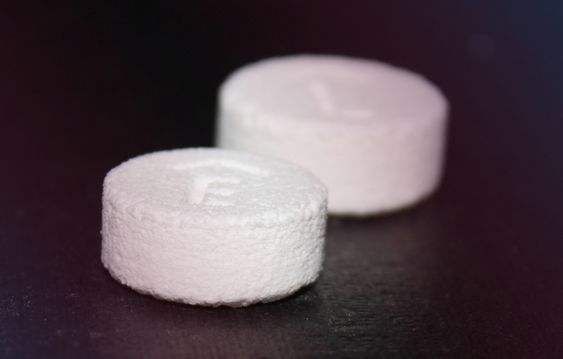
In recent years,3D printingTechnology has achieved certain results in the printing of pharmaceutical preparations, among which tablets, sustained and controlled release preparations and drug delivery have become research hotspots. In August 2015, the first one designed by Aprecia3D printingThe drug Spritam (levetiracetam) quick-dissolving tablets was approved by the FDA for marketing. The drug is based on ZipDose developed by its company
3D printingThe levetiracetam quick-dissolving tablet prepared by the technology platform has porous characteristics, and the degree of diffusion in water is much greater than that of traditional tablets, and it only needs a small sip of water to dissolve.
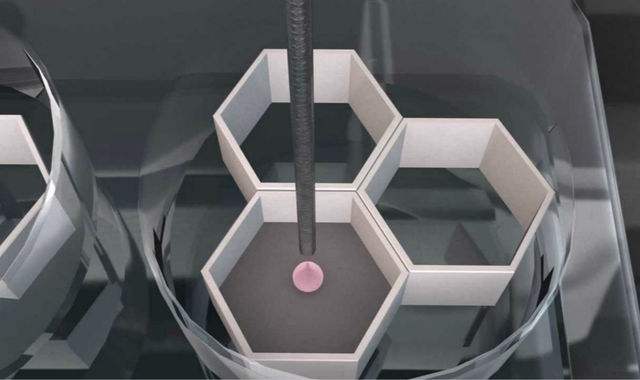
Currently, used in the field of preparations3D printingThe technology mainly includes fused deposition modeling (FDM) technology, selective laser sintering (SLS) technology, stereo lithography (SLA) technology and thermal inkjet printing (TIJ) technology. Among them, FDM technology is the most widely used in the field of formulations, and commercial FDM printers and printing software are mostly used for the preparation of tablets and sustained and controlled release formulations.
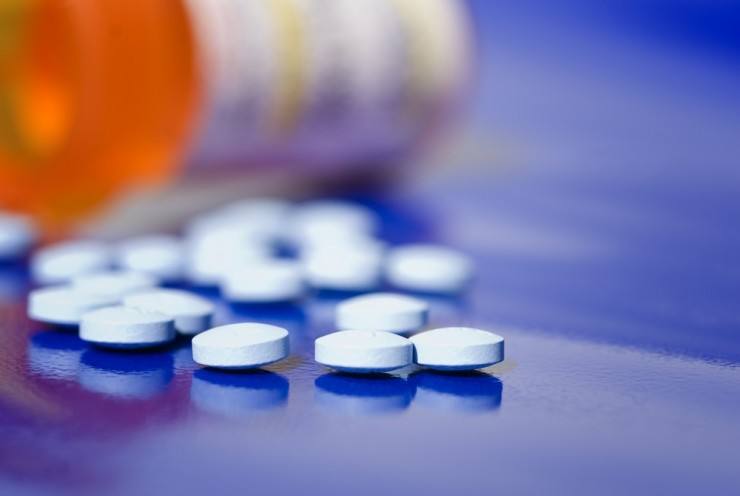
3D printingPharmaceutical excipients
3D printingThe basic principle of solid preparations is melt extrusion and deposition molding, but not all molten raw materials are suitable for pharmaceutical preparations.3D printingThe extruded consumables in the pharmaceutical preparations must be harmless or easily excreted by the human body, so the requirements for the materials are relatively high. Common ones are a mixture of copovidone VA64 and AffinisolTM15, hydroxypropyl methylcellulose, polycaprolactone, ethylene-vinyl acetate copolymer (EVA) and polyvinyl alcohol (PVA).
Copovidone is a water-soluble polymer resin. It is a white powder, odorless and tasteless. It is soluble in non-polar solvents such as water, ethanol and anhydrous alcohols. It has good adhesion and film-forming properties. Has good surface activity.Some scholars use copovidone VA64 and AffinisolTM15, polyvinyl alcohol-polyethylene glycol copolymer and other different polymers and drugs to mix for hot melt extrusion to prepare materials that can be used for printing. The results show that copovidone VA64 and AffinisolTM15 are used. Make a 1:1 mix as3D printingAnd a suitable polymer system for rapid drug release.
Hydroxypropyl methylcellulose (HPMC) is safe and non-toxic, and is often used as an excipient in the pharmaceutical preparation process. Using hydroxypropyl methylcellulose as the main auxiliary material, Soluplus and the main drug are mixed, and then melt-extruded to prepare the consumables for printing drugs and print them into controlled-release tablets, which have a smooth surface and a compact structure.
Polycaprolactone is a new type of resin with good biocompatibility and biodegradability. Now it is mostly used in controlled release drug carriers and medical surgical sutures.Use polycaprolactone as the main polymer compound to prepare polymerized nanocapsules3D printingTablets, discover nanotechnology and3D printingThe combination of technology can combine advantages, using personalized manufacturing methods to customize drug release and dosage, and using nanoscale to control drug release rate.
Ethylene-vinyl acetate copolymer (EVA) is a new type of environmentally friendly plastic foaming material, non-toxic. Use different specifications of EVA as the main auxiliary material to join the main drug for hot melt extrusion, and perform scanning electron microscopy (SEM), infrared spectroscopy (IR), differential scanning calorimetry (DSC), and X-ray diffraction (PXRD) on the extruded wire. ), in vitro drug release and other methods to analyze and study the crystal form and release rate of API in extruded materials and printed solid preparations. It was found that the resulting drug was more likely to be released from the surface of the fiber, forming spores in its outer area.
Polyvinyl alcohol (PVA) is a high-molecular organic substance, which is non-toxic to the human body, has no side effects, and has good biocompatibility. In the research of pharmaceutical preparations, it can be used to prepare water-soluble gels for eyes. Its water-based gel is widely used in ophthalmology, wound dressings and artificial joints. At the same time, polyvinyl alcohol film is also used in medicinal membranes and artificial kidney membranes. The fiber containing budesonide was successfully prepared using HME (Hot Melt Extrusion), and the budesonide load in the fiber was much higher than the load achieved by compatibilization with alcohol solution. TGA analysis and DSC data confirm that budesonide will not degrade during HME.
3D printingWith pharmaceutical preparations
compared to 3D printingApplication of technology in drug synthesis, commercialized 3D printingThe machine and existing software are more suitable for the preparation of pharmaceutical preparations, especially the preparation of tablets and sustained-release preparations.use
3D printingCompared with traditional preparation methods, technical preparation of drugs has the following significant advantages: ①fast forming speed; ②achieving precise forming of various materials and local fine control; ③no waste of raw materials; ④more precise production.Pharmaceutical technology and
3D printingThe combination of technology is expected to achieve “make-and-sell” medicines on demand.In the future, doctors can write digital prescriptions for patients based on the diagnosis, and simplify the prescription information into a bar code, and the patient can pass the prescription information bar code.
3D printingThe machine prints the medicine, and finally takes the medicine for treatment.use3D printingMachine-prepared medicines can realize the on-demand preparation of medicines and make the production of medicines more accurate. It is expected to reduce or even cancel medicine stocks, thereby solving the problem of medicine storage.
3D printingAnd new drug development
New drug research and development can reflect the economic and technical strength of the national pharmaceutical industry, and its research status directly affects the survival and development of the national pharmaceutical industry. In the development of new drugs, the differences between animal models and human tissues have led to many late-stage drug clinical trials that have failed. In response to this problem, some researchers have used in vitro construction of complex tissues closer to the body and used tissue models to New drug screening and drug experiment to solve.However, it is very difficult to construct living organ tissue models using traditional methods. With the development of science and technology, the use of
3D printingTechnology can print out living organs, such as liver, blood vessels, etc., will3D printingThe application of technically printed living organs to new drug screening and drug experimentation will help promote the creation of new drugs and provide a brand-new method for the development of new drugs.
3D printingAnd Chinese Medicine
According to the “holistic concept” and the theory of “differentiation and treatment” of traditional Chinese medicine, traditional Chinese medicine doctors will comprehensively consider the patient’s condition and physique in the course of disease treatment, while traditional Chinese medicine decoctions, tablets, powders, granules and other dosage forms exist , Inconvenience to carry, poor taste, large doses taken by patients, loss of active ingredients such as volatile oil, and uncontrollable drug dissolution rate, etc., have limited the modern development of Chinese medicine to a certain extent.3D printingDigital design can be carried out according to the prescription of traditional Chinese medicine to make the prescription dosage precise, improve the stability of the volatile oil in the preparation, better control the release rate of the active ingredient in the body, meet the medication needs of different patients, and exert a better curative effect.
will3D printingThe technology is applied to the preparation process of traditional Chinese medicine preparations, which can solve the problems of traditional preparations that need to add a large number of auxiliary materials, granulation, drying, pressurization, spheronization and other processes, and can realize the individualized administration of traditional Chinese medicines;
3D printingThe technology can print the processed precious medicinal materials into a suitable three-dimensional shape according to the requirements of the divided dose according to the designed three-dimensional graphics, which is expected to solve the problem of the original difficult to use precious medicinal materials in divided doses; encapsulate the volatile oil of traditional Chinese medicine in
3D printingIn the nozzle, according to the set program and three-dimensional graphics, it is directly printed on the center of the tablet, which can reduce the volatilization of the drug, increase the stability of the drug, and ensure the efficacy.
3D printingPharmaceuticals and traditional pharmaceuticals are complementary, and the two are in a complementary relationship. On the one hand, traditional pharmaceuticals have gradually matured after a long period of practice, and have unique advantages in industrialization and scale. On the other hand,3D printingAs an emerging technology, it can achieve precise shaping of various materials and local micro-control. It has more precise characteristics and can have an effect that traditional medicine can’t match in some special treatments. but,3D printingThe application of technology in pharmacy is still in its infancy and still faces many problems. However, I believe that with the unremitting efforts of scientific researchers, these problems will be solved.3D printingThe combination of technology and pharmacy will become a new trend in future development.3D printingThe popularity of medicines is just around the corner.
references:
[1] Liu Donghan, Liang Jun, Luo Juyuan, et al. 3D printingResearch Progress and Application of Technology in Preparation Technology[J]. Chinese Herbal Medicine, 2019(17).
[2] Zhao Hongling, Wang Chen, Gao Jundong, et al. 3D printingResearch progress of pharmaceutical excipients for preparations[J]. Electronic Journal of Clinical Medicine Literature, 2019, 6(03):200-201.
[3] Chen Guoning, Shu Hua, Yu Pei, Luo Zhimin, Du Wei, Chang Chun, Fu Qiang. 3D printingApplication of technology in the field of pharmacy[J]. Chinese Pharmaceutical Journal (Issue 16): 1353-1359.
About the Author
Xiao Yisha, a food science and technology worker, graduated from the School of Food Science and Engineering, South China University of Technology, with a master’s degree in food science, and now works in a large domestic drug research and development company, engaged in the development and research of nutritious food.
(Editor in charge: admin)
0 Comments for “Application status of 3D printing technology in the field of pharmacy”