

China3D printingNet October 3, it seems that custom clothing is a game for the rich, and it is far away from mass production. However, this situation may be changed. A researcher named Razieh Hashemi Sanatgar recently published ” FDM of conductive polymer nanocomposite 3D printing: A Novel Process for Functional and Smart Textiles”, explored the use of composite materials3D printingTo produce smart textiles.Although composite materials are used in many different applications, the researchers explain here that the3D printingCombining with such materials has “huge potential”. When experimenting with textiles, Sanatgar emphasized the importance of the development and characterization of polymers and nanocomposites.
Sanatgar’s mission is to propose a “textile functionalized process” that is flexible and resource-efficient, cheaper, and ultimately smart. These types of textiles have a wide range of uses:
1. Health care
2. Indoor textiles
3. Car
4. Protective clothing
5. Communication and entertainment
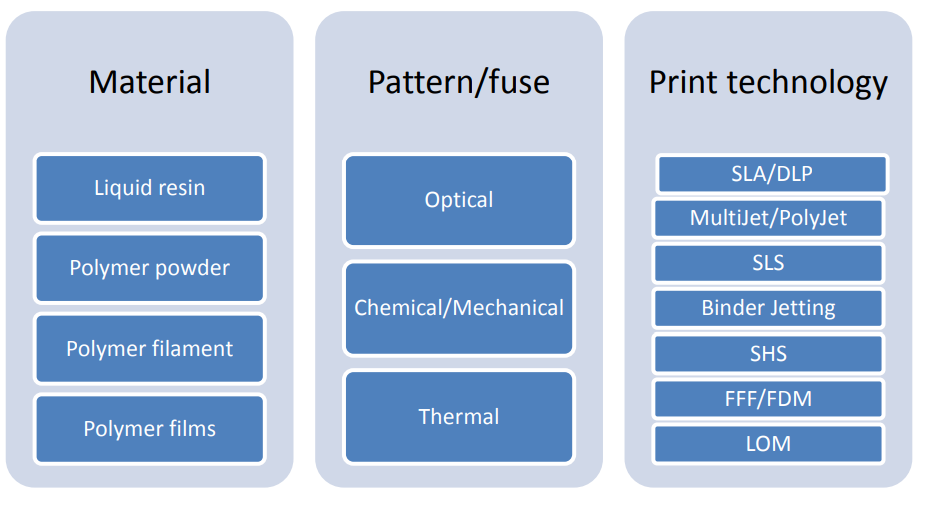
Overview of different monomer/polymer materials using special multilayer construction technology in additive manufacturing (SLA: lithography equipment, DLP: digital light projection, SLS: selective laser sintering, SHS: selective thermal sintering, FFF : Fused filament manufacturing, FDM: Fused deposition modeling, LOM: Laminated object manufacturing).The method is designed to be interdisciplinary and to solve problems related to non-renewable materials, energy and possible alternative methods. Sanatgar has a clear idea, that is, to find a production method to reduce the footprint and increase the overall output.Sanatgar said: “Directly on textiles3D printingThe energy demand in functional and smart textile development can be influenced by simplifying the supply chain. The supply chain can be improved by functionalization in certain places where the end user needs it. Therefore, energy consumption can be reduced by shortening the length of the supply chain.exist3D printingBecomes feasible.
Smart textiles are a classic “future wave” medium, capable of responding to user needs according to changes in their environment. However, smart functions are not without challenges, especially in:
1. Durability
2. Reliability
3. Industrialization of the scalable production process
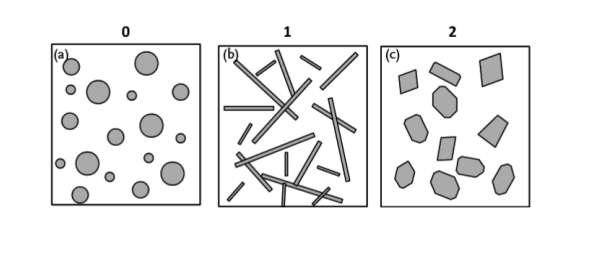
Schematic representation of zero, one and two-dimensional fillers in a polymer matrix[67]
Sanatgar also found that the parameters in the manufacturing process showed obvious adhesion problems. The extruder temperature and printing speed play a significant role, although the research team did find that the platform temperature did not have much effect. Diffusion theory provides an explanation for adhesion here, because the diffusion of molecules leads to better fusion.
“Because the two polymers are incompatible, PLA deposited on the PA fabric will not exhibit high adhesion; however, it confirms our previous results regarding the influence of extruder and platform temperature on adhesion, and It shows that the surface structure of the fabric is also effective. The adhesion of the deposited PLA and PLA nanocomposites on the PLA fabric is very high, which in all samples depends on the strength of the deposited layer and the fabric, the tearing of the fabric or the deposited layer The fracture, the polar ester groups in these two adhesives and the insistence on using diffusion theory can explain this phenomenon.”
China3D printingOnline reviews:Energy use is a huge problem in the textile industry, and the point here is that if a technology that allows the reduction of water, energy, chemicals and waste emerges, it should be fully developed. “However, there are still many challenges to achieve this goal. For example, the technology is not ready to meet the needs of the industry, and awareness and education are needed to apply resource-efficient processes in textiles. This article is dedicated to applying a new technology to functions. The development of sex and smart textiles. The most challenging problem in the smart textile market is that existing technologies cannot meet the needs of customization, so there are still challenges in terms of economy and production scale. 3D printingIt is a flexible technology that can be customized using less water, chemicals and energy for various possible applications, such as direct integration of sensors and interconnections on the fabrics required, water-free and non-water-free Solvent and pattern functionalization process,There is no doubt that as researchers collect data on the advantages of polymer composites, copper-metal composites, and alternative materials such as wood, composites are improving.3D printing.
China3D printingNet original article!
(Editor in charge: admin)
0 Comments for “Conductive polymer nanocomposites used in 3D printing smart textiles”