

China3D printingNet, October, October, Harvard Business School student Tom M. in the recently published ” 3D printingPasta-in the food industry3D printingThere are many interesting features outlined in Are the Benefits Limitations? These features involve the potential of using new manufacturing methods to create products.
And even though most of us are right3D printingFood is very keen, and this is only because of the continuous demand for interesting new technologies and snack ideas-there is still the question of whether such a process is worth the time and effort.Of course we can3D printingfood. But do we need it?
Tom explored food3D printingIn many aspects, I first understood the impact of this technology on key global industrial fields (including aerospace, medicine, etc.).
although3D printingFood in3D printingThe schedule is relatively new, but there are many benefits that make this type of process attractive to companies of all sizes.In fact, the author tells us3D printingThe food industry is expected to grow at a rate of 40% every year, and will develop into an industry worth more than US$500 million by 2023.
From niche service and boutique retailers to manufacturers researching custom and mass production methods,3D printingFood creation also appears in many different forms, which can save time and money exponentially.

In applications such as chocolate or pasta,3D printingThe machine can be constructed layer by layer by using pre-designed formulas to create unique shapes and structures.
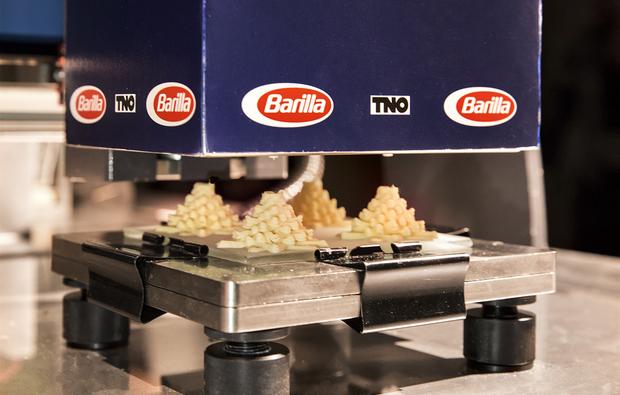
Pasta maker Barilla is now further researching its use3D printingMachine for product customization, the company has already released in 2016 for the production of fresh pasta3D printingAt the same time, it also poses challenges and requires consumers to participate in learning. Barilla is also experimenting with other customized foods related to pasta, such as gluten-free foods.
“Although additive manufacturing is still an emerging business in the food industry, companies like Barilla continue to research and innovate this technology to create long-term value.” Tom said.
“On a global scale, we are seeing an increase in population, an imbalance in wealth and nutrition. We have also witnessed a global trend towards sustainable development in all industries, including food production. With the help of technologies such as 3D food production, we have There is an opportunity to effectively customize nutrition on a large scale.”
“3D printingHow can technology help address dietary restrictions and nutritional deficiencies in an accessible way? How does this technology improve the efficiency of the global food market?TomFinally, I summarized many issues to be considered,Food3D printingIt is an area that many users in the world like to try, and we enjoy more knowledge, from the menu for patients with dysphagia to trying3D printingSushi, holiday food, etc., everything.
China3D printingNet original article!
(Editor in charge: admin)
0 Comments for “Harvard Business School: Exploring the future of 3D printed food”