

The high-pressure reactor is the most ideal device for chemical reactions under high temperature and high pressure, especially for chemical reactions of flammable, explosive, and toxic media, which shows its superiority.Now, with3D printingAdvances in technology applications, recently, BASF3D printingThe high-pressure reactor became the first case to pass the European pressure equipment standard.
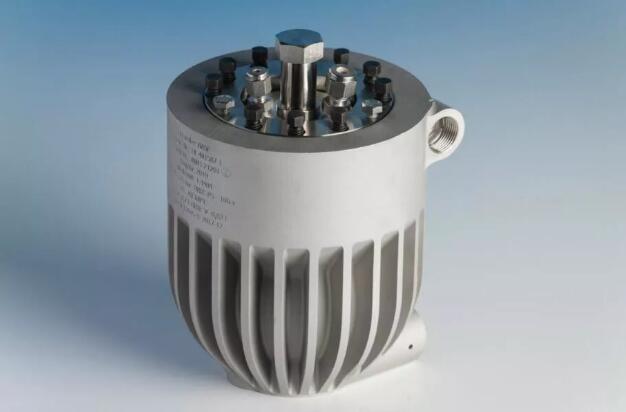
Source: BASF
 Added value3D printingTo create
BASF will3D printingThe innovations applied to the components used in its production facilities are aimed at optimizing components with new design freedom-thereby improving BASF’s chemical processes and processes.Compared with traditional manufacturing process,3D printingCan create added value for products. Especially for pressure equipment, this is a special challenge, especially in terms of design, manufacturing and certification.This is the first additive-manufactured autoclave that complies with the European Pressure Equipment Standard (2014/68/EU). The autoclave made of austenitic stainless steel (working pressure = 225 bar) meets the requirements of category III.This makes BASF the first company to carry out a certification process for additive manufacturing of autoclaves, which includes3D printingProcess testing of equipment.
Next, BASF will continue to design, manufacture safety-related components, and quickly put them into operation, which is usually impossible to produce by conventional manufacturing.An autoclave is a kind of container that melts metal through a selective laser3D printingThe technically manufactured components are composed of corrosion-resistant austenitic stainless steel. Compared with conventionally produced autoclaves, additive manufacturing has advantages in the geometric design of complex shapes. For example, in this type of autoclave, a complicated internal channel is formed in the vessel wall for the flow of heating or cooling media. Via the passage.
The new design brings faster temperature cycling, more uniform temperature distribution and temperature control of components.
This is an exploration of a new field. BASF’s first test process for pressure equipment for additive manufacturing is full of challenges. It is a team of experts from the field of design, FEM simulation (Finite Element Method), non-destructive testing, welding technology and material engineering. Completed this task.
Review
BASF has been producing high-voltage technology components and systems for more than 100 years and has always been at the forefront of cutting-edge technology. In 1931, Carl Bosch won the Nobel Prize in Chemistry for his invention of the chemical high-pressure ammonia synthesis method. Today, BASF operates more than 40 high-pressure technical chemical production plants worldwide with a maximum pressure of 3,600 bar. BASF’s extensive product portfolio of mechanical engineering technology includes not only measurement and control components, but also various high-pressure valves, equipment and pipelines with a maximum working pressure of 3,600 bar.
3D printingIt is creating parts with excellent performance in the chemical industry.
According to market observations from 3D Science Valley, not only BASF, another company Shell is also developing AM additive manufacturing projects. At present, Shell is developing what is said to be the world’s first3D printingPressure vessel. In this pioneering effort, it is important to pass product qualification certification, not only to meet legal and safety requirements, but also to contribute to collaboration in the supply chain, which will benefit the entire industry.
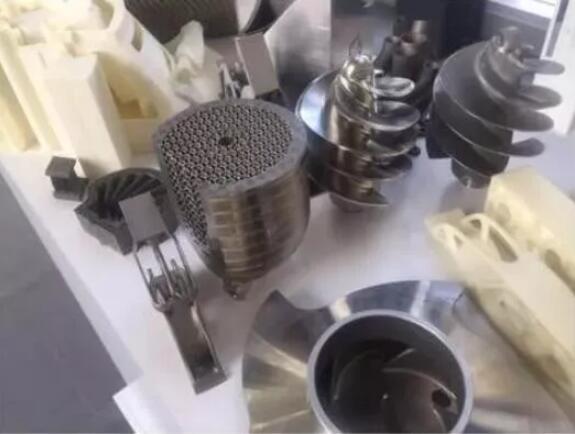
Shell melting in its powder bed at its Amsterdam Technical Center3D printingComponents Source: Shell
Selective metal melting for powder bed3D printingTechnically,3D printingPressure vessels are still an area of special concern, as are heat exchangers and radiators, and lightweight parts with lattice structures
0 Comments for “See BASF 3D printing the first high-pressure reactor that passed European pressure equipment standards”