

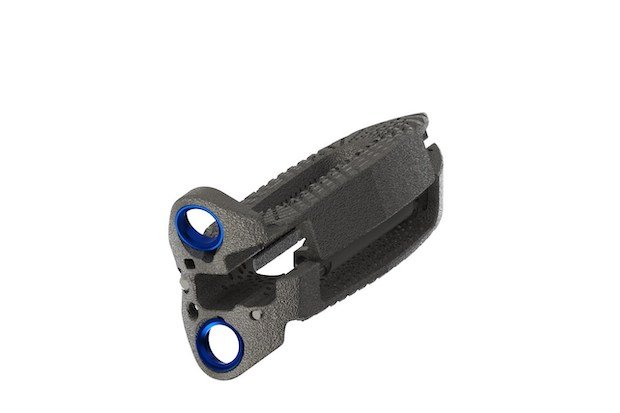
On November 1, 2019, Stryker (Stryker) announced that its research and development3D printingThe horizontally expandable implant obtained FDA 510K certification.
Stryker has announced its3D printingSAHARA has FDA 510K approval for the horizontally expandable human body system.
It is reported that the horizontally expandable fusion implant relies on its layered titanium 3D technology, which was developed by K2M, a medical device company acquired by Stryker last year. With its passive expansion function, surgeons can achieve up to 30 degrees of spine correction in patients with mature bones.
Layered titanium 3D technology can create structures that were previously impossible to achieve with traditional methods. The high-energy laser beam selectively sinters the titanium powder to print the SAHARA implant and retain the rough surface structure. Clinical trials have proved that the rough surface can increase the expression of protein compared to the smooth titanium surface.
Stryker will present its latest update at the Society of Minimally Invasive Spine Surgery (SMISS) this week3D printingImplant.
Eric Major, President of Stryker’s Spine Department, commented: “At Stryker, we have invented the most advanced solutions in the country. It is our vision and purpose to solve unmet clinical needs. SAHARA Lateral will be presented at this year’s SMISS Annual Forum. On display, it provides surgeons and hospital systems3D printingThe solution is used for corrective surgery of complex spinal deformities, and at the same time strengthens our commitment to medical innovation and people who improve the quality of life. “
According to SmarTech’s forecast, in 20163D printingThe medical market has reached 1.229 billion U.S. dollars, of which3D printingThe implant market size reaches 823 million US dollars; in 20243D printingThe medical market for implants reached 9.639 billion U.S. dollars, of which3D printingThe market size of implants amounts to 8.12 billion U.S. dollars. In the global market, nine companies including Depuy, Stryker, Zimmer, Synthes and other brands of orthopedic implants account for 80% of the market share of the entire orthopedic implant market.
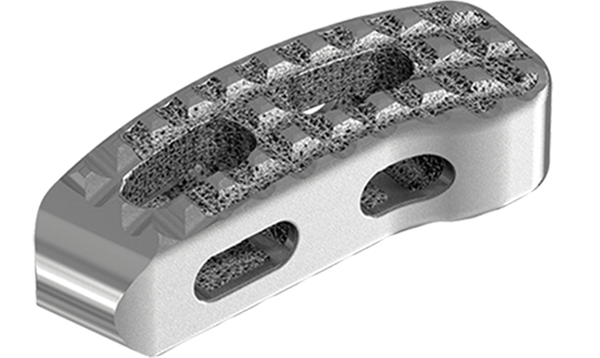
March 9, 2018, Stryker3D printingTritanium (titanium alloy) TL curved lumbar spine, obtained 510(k) approval from the US Food and Drug Administration (FDA).This is a3D printingIntervertebral fusion cage for lumbar fixation.Hollow implants consist of a unique configuration of solid and porous structures, both of which are made using Stryker’s proprietary additive manufacturing process AMagine3D printing, Used in the production of implants.
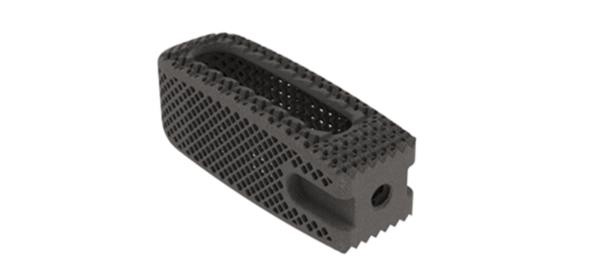
On September 3, 2018, Virginia medical device manufacturer K2M will be acquired by Fortune 500 medical technology company Stryker Corporation (NYSE: SYK). The purchase amount reached 1.4 billion U.S. dollars (approximately 9.5 billion RMB). K2M has a variety of FDA certified3D printingImplants, the company’s two in 20163D printingSpine solutions-CASCADIA Cervical (cervical spine) and CASCADIA AN Lordotic Oblique (anterior oblique) have been approved for sale by the U.S. Food and Drug Administration (FDA). In 2017, they had a new product for spinal support-MOJAVE PL-which was approved by the U.S. Food and Drug Administration (FDA).
In 2016, orthopedics business revenue was 5.176 billion U.S. dollars (orthopedics + spine), ranking third in the global orthopedics field.
Due to its good performance, Stryker was rated as one of the Fortune 500 companies and one of the top 50 medical companies in the United States by the well-known “Fortune” magazine and “Business Week” in the United States.Stryker has a very good clinical reputation in the Chinese market. In recent years, it has also been extremely active in the global capital market. Through continuous acquisition of medical device manufacturing companies, expanding its product market share and product line is also a good prospect for the future of the global medical device market.
(Editor in charge: admin)
0 Comments for “Stryker’s 3D printed laterally expandable cage implant obtained FDA 510K certification”