

China3D printingNet October 24th, Italy3D printingMachine manufacturer WASP is cooperating with Mario Cucinella Architects (MCA), an architectural firm based in Bologna, to jointly3D printingModels of sustainable global habitats.
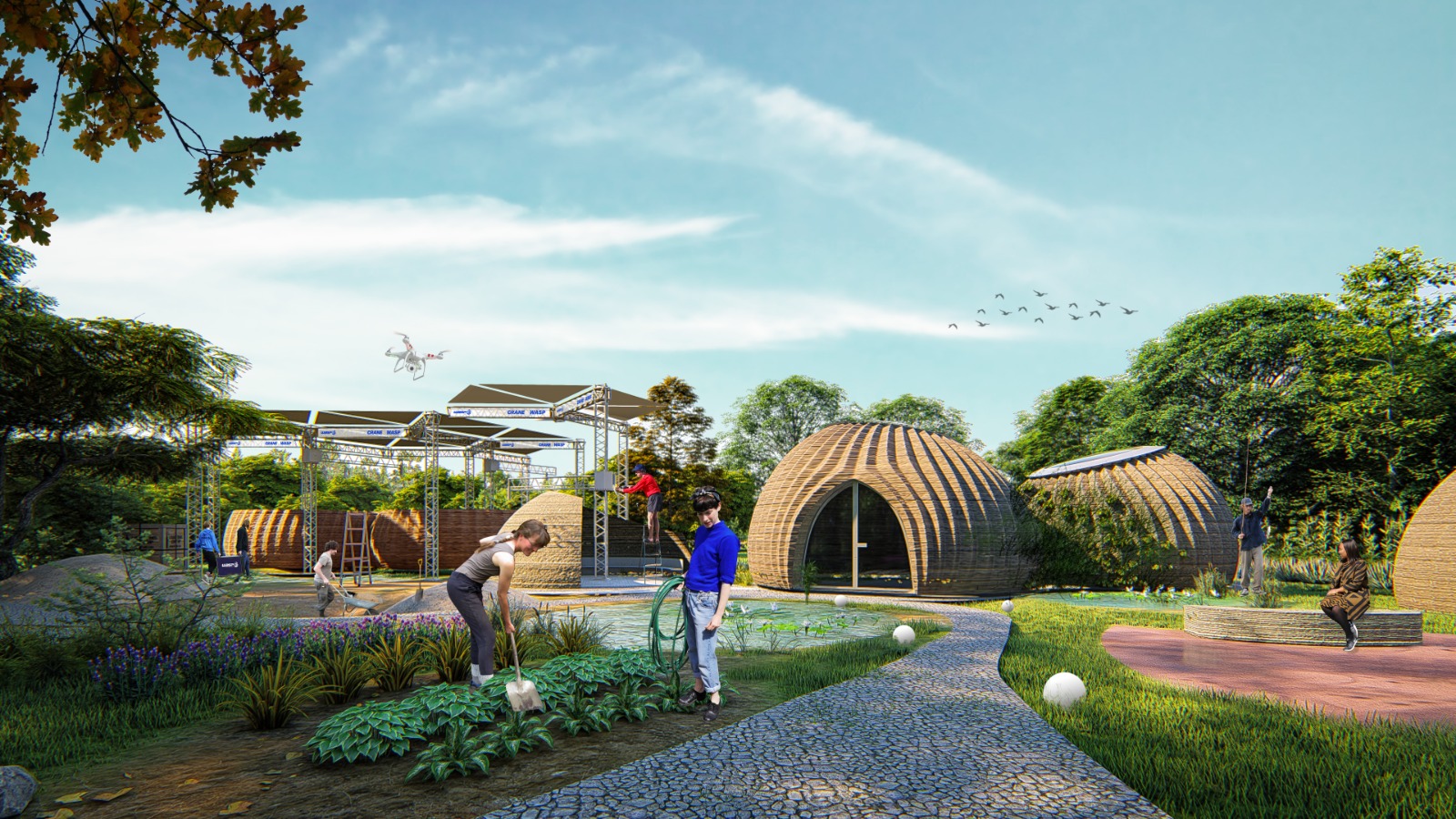
The housing model called TECLA is based on a circular structure manufacturing process that utilizes reusable and recyclable materials obtained from the local terrain.It is constructed using Crane WASP3D printingMachine-built, represents an attempt to build an “ecological residence” solution. WASP and MCA, with the help of various partners, have embarked on the project to cope with the exponential population growth and subsequent housing shortage. The two companies plan to build near Bologna, Italy.They have obtained the TECLA prototype license in May 2019 and started in September3D printing. It is expected to be completed in early 2020.
MCA founder Mario Cucinella explained: “Together with WASP, we aim to develop innovative3D printingPrototype to respond to the increasingly urgent climate revolution and community needs.
“
3D printing
Habitat” alt=” TECLA
3D printing
Habitat” />
TECLA 3D printingHabitat. Image: Mario Cucinella Architects
WASP was established in 2012 with the aim of developing feasible construction processes based on the principles of circular economy.The company believes that the use of materials found in the surrounding area to build3D printing“Zero mile” housing is the key to solving the global population crisis, which has brought huge challenges to the government in housing solutions.Therefore, its research focuses on constructing3D printingThe printer can build clay houses in the shortest time and in the most sustainable way.
The company’s first3D printingThe machine is PowerWASP, which is a kind of milling function3D printingMachine, and then proceeded to develop its DeltaWASP series3D printingMachine, the series covers from small to large3D printingBuild volume. An important milestone of WASP in 2015 was the development of BigDelta WASP, which is a 12 million high3D printingThe machine, used to build houses, can extrude technology (concrete) and raw materials such as straw and terrain. The company used the machine to carry out the Shamballa project, an eco-friendly technology village in Italy built using resource-rich additive manufacturing technology.
3D printing
The design of the machine” alt=”Crane WASP
3D printing
Machine design” />
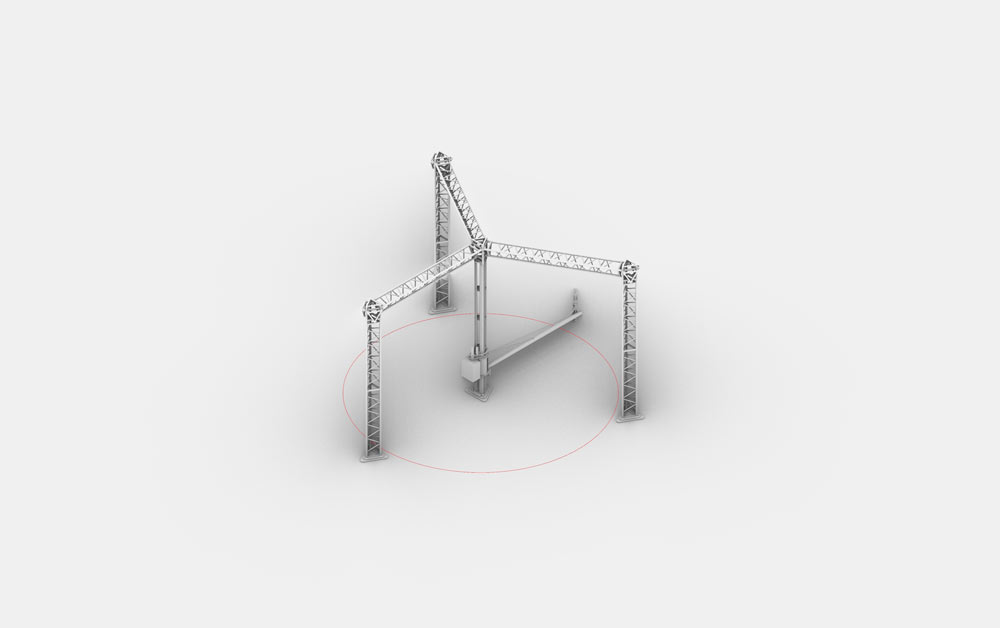
Crane WASP 3D printingThe design of the machine. Image via WASP.
Then in 2018, the company created Crane WASP 3D printingOpportunities to help accelerate the development of the village. Crane WASP 3D printingThe footprint of a single module of the machine is smaller than that of BigDelta WASP. The diameter of the printing area is 6.60 m and the height is 3 meters. Crane WASP can also be disassembled and reassembled for fast transportation and on-site construction. It was used to successfully complete a small building in Shamballa Technology Village. The building is called Gaia and has a diameter of 21.6 feet and a height of 9.8 feet.It is made up of 25% soil, purchased on site, 40%ChoppedIt is made of cement made of straw, 25% rice husk and 10% hydraulic lime.
Now that WASP and MC A have started their TECLA project, he believes that the housing model may provide a basis for the creation of an autonomous eco-city. “WASP draws inspiration from the Potter Wasp. We use the land found on the spot to build from a sustainable perspective.3D printinghouses. WASP CEO Massimo Moretti commented: “The fusion of the oldest materials and the most advanced technology brings new hope to the world. Gaia is our first home made of raw soil.3D printingThe house was born a year ago. Today, we work with our partners to print the entire ecologically sustainable habitat on TECLA. “
 3D printingPart of the ground wall” alt=”of the TECLA house3D printingGrounding wall part” />
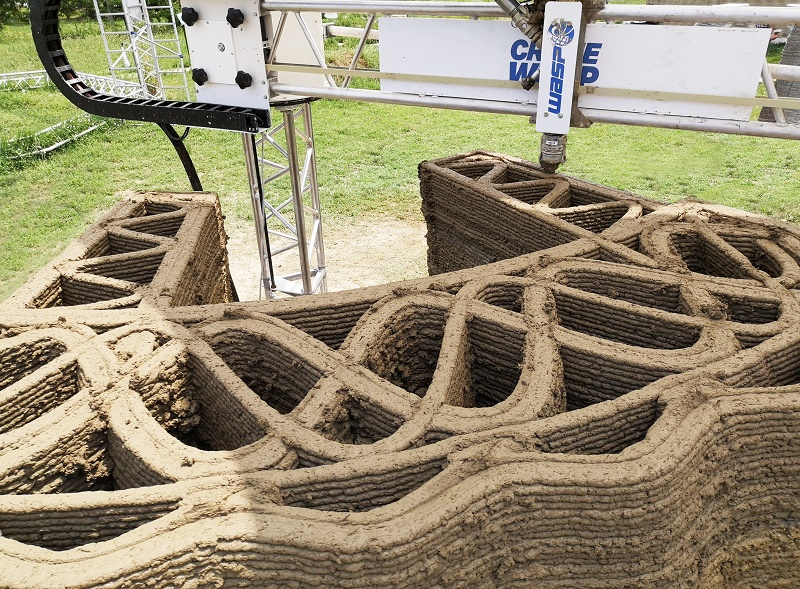
TECLA housing3D printingGround wall part. Filmed via WASP.
3D printingTECLA House
The TECLA project was designed by MC A and designed and manufactured by WASP.According to reports, this will be the first to use multiple3D printingMachine-built habitat is also the first to use local clay for3D printingHouses. This will help limit industrial waste and therefore provide a sustainable model that WASP hopes to promote national and local economic development. In addition, TECLA houses are designed to adapt to multiple environments and can be built by Crane WASP 3D printingThe construction of the machine is completed at one time, thus speeding up the construction process.
The TECLA project is the research and development of the School of Sustainable Development (a professional school focusing on sustainable architecture) founded by Mario Cucinella. This research was further supported by master students of the Sustainable Environmental Design Program of the School of Architecture of the Architectural Association of London.Researchers have jointly studied the causes and effects of homelessness, as well as the potential for technological advancements in different locations based on climate change to help achieve suitable solutions. This helps provide information for TECLA’s design, resulting in a flexible model that can adapt to any climate, while still reportedly maintaining energy-saving effects that traditional house models cannot.
China3D printingNet original article!
(Editor in charge: admin)
0 Comments for “WASP and MCA collaborate to develop 3D printed houses to solve the global housing crisis”