

About additive manufacturing-3D printingFor the application of technology in the fermentation industry, 3D Science Valley once introduced a new blade designed by GE for beer brewers. This blade uses3D printingTechnically manufactured, it has a special internal channel that can inject water into it when shredding and whipping the malt. In this application, GE used expertise similar to aerodynamics in the aerospace field to reduce the time of the filtration and injection process by nearly 50%, which means that brewers can double the amount of beer brewed in a day .
Coincidentally, through3D printingThe technology to increase the air inflow velocity has also been applied in the air defoaming technology-automatic foam swallowing complete equipment developed and produced by Beijing Boshuo Deheng Technology Development Co., Ltd.Bosuo Deheng is trying to pass3D printingTechnology improves the foam absorption capacity of the solenoid in its equipment.
The equipment of Bosuo Deheng Technology is widely used in the production process of biological aerobic fermentation and the production of general viscous bubbles. As the core component of the automatic foam swallowing machine, the solenoid is due to the complexity and particularity of the internal circulation channel. It is difficult to meet the needs of modern technology for the rapid and low-cost development of solenoids by using traditional manufacturing processes.3D printingIt brings new space for the innovation of solenoids.
This issue of Gu. Column fully demonstrated the analysis process and method of Solenoid optimization design based on fluid optimization simulation technology by Anshi Asia Pacific (as shown in Figure 1).
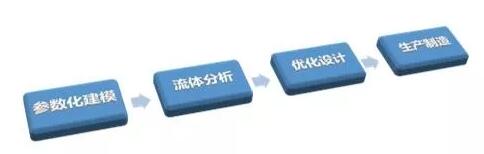
Fig. 1 Optimal design process of solenoid.Source: Anshi Asia Pacific
In the case of this article, the solenoid is first geometrically modeled and parameterized based on the original design of the solenoid, and then the flow of the airflow in the solenoid is obtained through the fluid simulation software, and the parameter optimization software is used to complete the solenoid The design parameters are optimized, and finally the optimized solenoid is produced through additive manufacturing technology.
 Research objects and goals
In this paper, a solenoid of a certain specification is used as the analysis object. Its original design structure is shown in Figure 2. Through fluid simulation analysis, the jet velocity of air passing through the solenoid is obtained, and the geometric structure of the solenoid is optimized to improve the air The inflow velocity and the pressure difference between the inside and outside of the foam suction port, thereby improving the foam suction capacity of the solenoid.
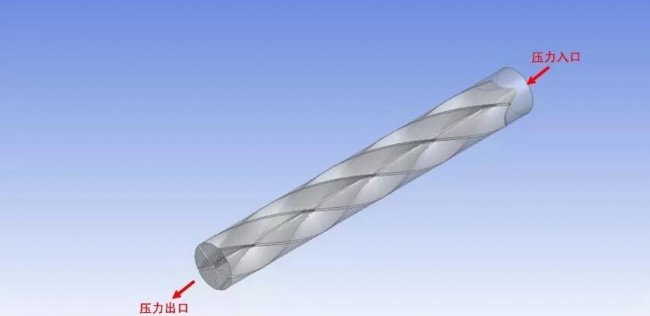
Figure 2 The original design of a solenoid of a certain specification.Source: Anshi Asia Pacific
Parametric modeling
The calculation domain for fluid simulation established according to the original structure of the solenoid is shown in Figure 3, and the geometric feature parameters of interest are parameterized. For details, see Table 3.1. The modeling and parameterization of geometric features can be entered into the subsequent simulation process through ANSYS DesignModeler.
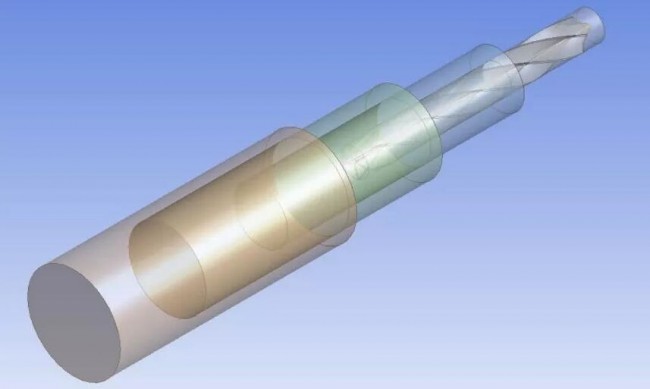
Figure 3 Computational domain used in fluid simulation.Source: Anshi Asia Pacific
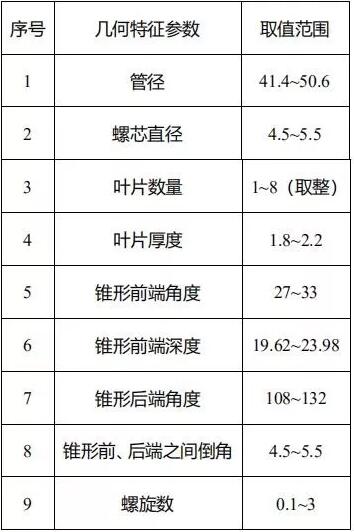
Table 3.1 Geometric feature parameters that can be parameterized.Source: Anshi Asia Pacific
Flow field analysis
Use the fluid simulation software ANSYS Fluent to analyze the flow field of the solenoid, obtain the air flow in the solenoid under specific boundaries and material properties, and obtain the air intake at the inlet of the pipe and the pressure difference between the inside and outside of the suction port. The air intake at the pipe entrance and the pressure difference between the inside and outside of the suction port are parameterized for subsequent optimization of optiSLang parameters.
The air flow in the solenoid of the original design is shown in Figure 4. It can be seen from the figure that the air velocity at the solenoid inlet is 485m/s, and the pressure difference between the inside and outside of the suction port is 5.255KPa.
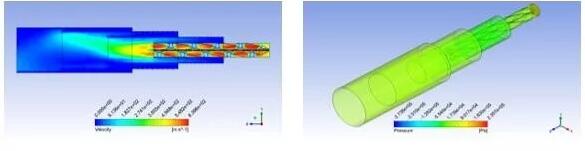
Figure 4 The velocity and pressure distribution of air in the solenoid of the original design.Source: Anshi Asia Pacific
Optimal design
OptiSLang is used to optimize the geometric characteristic parameters of the solenoid. The goal is to make the designed solenoid have the largest air intake at the pipe inlet and the largest pressure difference between the inside and outside of the suction port under a given pressure condition. The optimization design process is divided into three steps. The first step is parameter sensitivity analysis, which is to find the most sensitive (ie most important) design parameters to the design goals and constraints, and to fit the response surface of the design goals and constraints to generate High-quality response surface for subsequent optimization analysis. The parameter sensitivity analysis result of this case is shown in Figure 5. Through the analysis, it is found that the number of spirals and the number of spiral blades are most sensitive to the design goals and constraints.
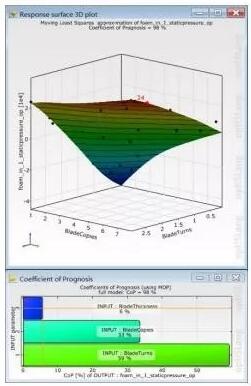
Figure 5 Parameter sensitivity analysis results.Source: Anshi Asia Pacific
(Editor in charge: admin)
0 Comments for “Better fermentation, 3D printing and fluid simulation optimization technology combined to help the design and manufacture of defoaming equipment solenoid”