

China3D printingNet October 29th,“Since the retiring of the space shuttle in 2011, we are on the cusp of launching American astronauts with rockets from the United States. We now need to return to this activity with our international partners, and we are committed to commercializing low-Earth orbit. (LEO). We are looking for a breakthrough that can change our way of life on Earth. When these key technologies change, funds will flow into LEO’s commercial living capacity and commercial space station. So what should we do? NASA Director Jim・Bradenstein on FridayWhen astronauts return to the moon and continue to play a key role in Mars, declared: “One of our jobs is industrialized biomedicine.”
From the Moon to Mars: NASA’sPlanned atAt the 70th International Astronautical Conference (IAC) in Washington, DC. On this day, ordinary people have the opportunity to go to IAC to listen to the latest news of NASA activities, including major discoveries and future missions. IAC brings together space agencies, astronauts and scientists from all over the world to discuss the latest discoveries, missions and ideas of space exploration.
BradensteinVery focused on the next move of mankind in space.In his speech, he conducted a live broadcast on the website of the National Aeronautics and Space Administration (NASA). He emphasized the importance of learning space biomedicine and emphasized the use of available resources on site as part of the human experience through learning. Sustainable access to spaceTrack, which will allow us to live and work for a long time. It also implies that the technologies and capabilities we developed on the International Space Station, low earth orbit and the moon will eventually be replicated on Mars.
“As we move forward, there is still a lot to do, but now we are using the International Space Station to3D printingHuman tissues, and finally use adult stem cells to carry out human organs3D printing, The purpose is to change our lives on earth. “
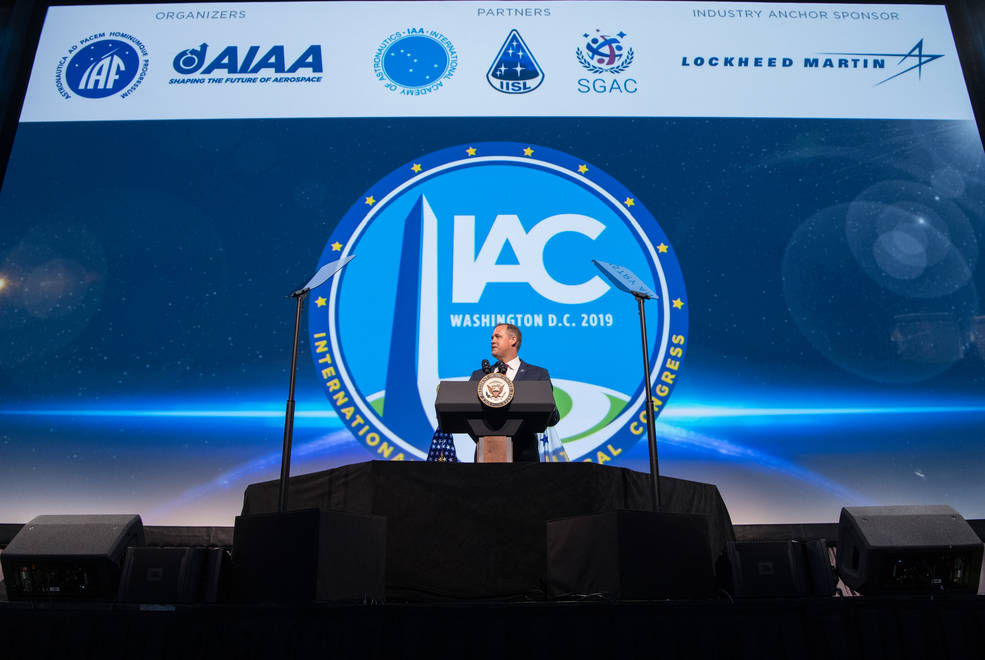
NASA Administrator Jim Bradenstein attends the 70th International Astronautical Conference (Photo credit: NASA/Bill Ingles)
“Currently, we are working hard to make artificial retinas in orbit. These are operations that cannot be performed on Earth due to the layering of materials, but you can use the ISS to operate in the microgravity of space. Imagine one that fits your palm. And put it in the space filled with materials. But when that box returned to the earth, we opened it to find a thousand artificial retinas. These retinas can help people who suffer from macular degeneration and may lose sight . I’m not saying that I know this is going to happen, what I want to convey is that we are working hard for it day after day.”Bradenstein says.According to China3D printingNetwork understanding
, Using ISS to achieve a breakthrough is only the first step, which will attract investment so that we can have multiple space stations funded by the commercial industry. This is how NASA can continue to exist in LEO.
“NASA wants to be one of many customers in a very strong commercial market for LEO. Just like what we did with the commercial supply of ISS, we want many providers to compete with each other in terms of cost and innovation. Because this is who we are. Ways to reduce costs and increase access rights.”
Commercial supplies, commercial crews, and ultimately commercial residences are what NASA administrators believe is the key to successful LEO commercial operations. As a retired naval pilot and politician, Bradenstein has reiterated time and time again that the United States will work with international and business partners, claiming to live in LEO in a natural environment, “We need industrial biomedicine and advanced materials to succeed. .”
He suggested: “When the Apolo mission ended, before the space shuttle began to enter space, we had a gap of eight years, and after the space shuttle ended, we retreated to eight years ago. Therefore, we have to make sure that during the existence of LEO we There is no gap between. We need to return to the moon.”In the past few years, NASA has greatly promoted the creation of an open architecture in space by scientists, businesses, and international partners, in which competitiveness drives innovative imagination., It reduces the cost.Many bioprinting and3D printingWork arrived at the International Space Station as a payload on an international rocket.Just two weeks ago, NASA and the space manufacturer (Made In Space) talked about the upcoming space manufacturing recycling facility to test the reprocessing of plastic into3D printingFilament to create a system of microgravity objects. In late July, the National Aeronautics and Space Administration (NASA) biomanufacturing plant began to carry out replenishment missions to the International Space Station (ISS), and astronauts from the International Space Station National Lab (ISS National Lab) will plant heart tissue here. Dozens of companies are increasingly interested in coming up with ideas that can help solve many of the challenges that humans will encounter in the process of space exploration, and American institutions will certainly open the door to create a competitive environment and develop it into a commercial future .
According to China3D printingThe net understands that some of NASA’s future missions, including the new VIPER lunar rover, will orbit the moon and support human missions on the lunar surface for 15 years; the OSIRIS-REx spacecraft is currently heading to a near-Earth called Bennu The asteroid brought back a small sample for research. All these missions will provide research for the crew’s mission to survive in space.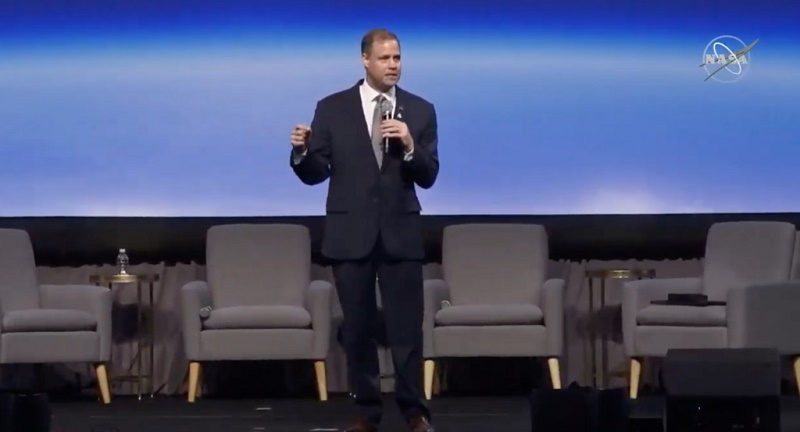
The Director of NASA emphasized the influence of the agency on a global scale, “not only inspiring exploration, science and discovery, but also inspiring children and shaping their imagination”, and “influencing the United States and how the United States establishes an international alliance. Impact.” NASA received less than 0.5% of the US federal budget, but it laid the foundation for jumping into space, which is huge and even increases the possibility of discovering life on another planet.
3D printingIt will undoubtedly play a key role in deep space exploration, and it will become a key technology for long-term flight, avoiding spacecraft from carrying such a large payload, thereby making the journey sustainable.“We are going to the moonLong timeLearn to live and work, because eventually when we go to Mars, we will have to stay there for a long time. Earth and Mars are on the same side of the sun once every 26 months, which means that when our astronauts leave the Earth, they must be prepared to stay. The moon is a testing ground, but Mars is the destination. “
China3D printingNet original article!
(Editor in charge: admin)
0 Comments for “Director of NASA: Space Industrialization Biomedicine and 3D Printing Applications”