

China3D printingNet September 27th, as part of Johnson & Johnson Medical Equipment Group, DePuy Synthes has launched a new3D printingTitanium spinal implant production line. Since it was acquired by Johnson & Johnson Medical GmbH in 2018, the device has been called the CONDUIT Interbody Platform, which is the first version using the trademark technology of Germany’s Emerging Implant Technology (EIT).
Nadav Tomer, Global President of Spine of DePuy Synthes, commented: “The goal of the spine business is to focus on the areas that have the most potential to solve unmet clinical needs. We are very pleased that our human implant products have become the surgeon’s choice.
With the launch of our comprehensive implantation plan for deformed intervertebral disc disease, let us become a spine solution to improve the viability of patients, so that every patient can receive more advanced standards of care. “
EIT honeycomb titanium
CONDUIT is a new series of implants made of EIT Cellular Titanium. The elastic properties of EIT Cellular Titanium are comparable to the cancellous tissue of the human bone core. Each shape and size are different (partly depending on the direction of implantation), and the center of each CONDUIT implant is designed as a grid. Compared with the atypical porosity of natural cancellous bone (50-90%), this structure gives the implant a porosity of 80%. As the body heals, the organization and porous structure of the implant promotes the transplantation of natural bone.
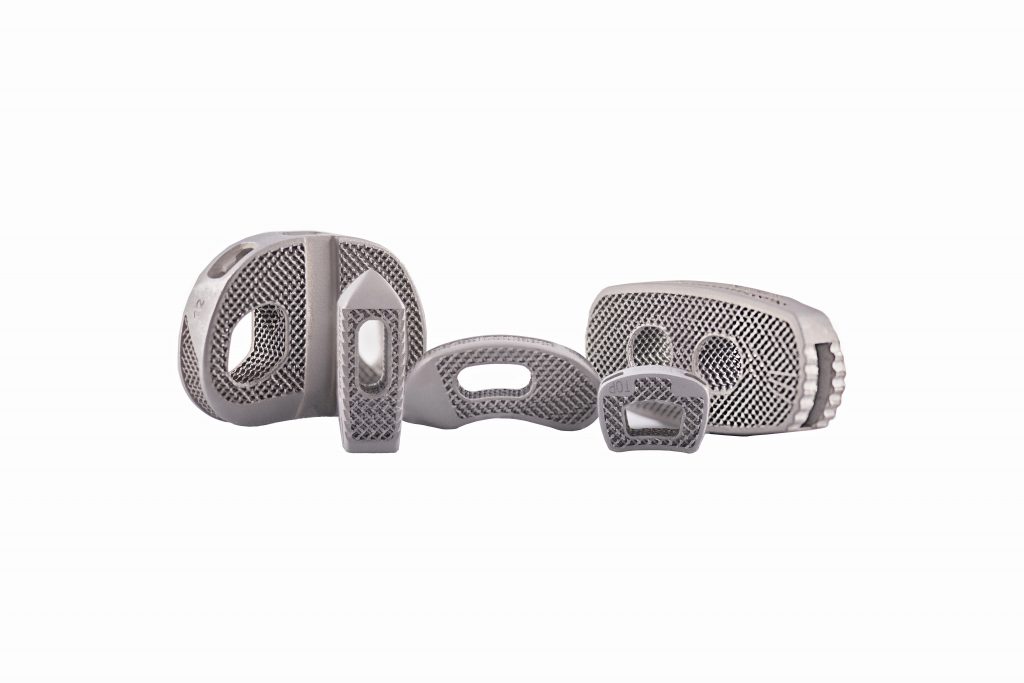
DePuy Synthes’ CONDUIT antibody platform with EIT Cellular Titanium technology.Photo courtesy of Johnson & Johnson Medical Equipment Company
Catheter implants are used to treat collapsing intervertebral discs to develop degenerative spinal diseases. Dr. Wilson Z. Ray, a neurosurgery surgeon and DePuy Synthes spine consultant, has direct experience using this device in the lumbar (lower back) and cervical (neck) regions of the spine. One of the advantages Dr. Ray pointed out is the visibility of the implant during post-operative monitoring. He commented: “Compared with other titanium interbody implant devices, the implant can provide excellent visualization, with almost no dispersion in CT scans and early fusion assessment.”
DePuy synthesis and additive manufacturing
DePuy Synthes is committed to supporting the development of medical additive manufacturing.After acquiring EIT, the company invested 36 million euros through its Irish Innovation Center to promote3D printingThe development of materials science.The company also owns Tissue Regeneration Systems in Michigan3D printingTechnology, and established a long-term surgical guide production partnership with Materialise.
Especially for3D printingSpine implants, the company is competing with US medical device manufacturer Stryker and others, which currently claim to have “the largest3D printingImplant product portfolio”.
China3D printingNet original article!
(Editor in charge: admin)
0 Comments for “Johnson & Johnson Medical Group launches new 3D printed titanium spinal implant production line”