

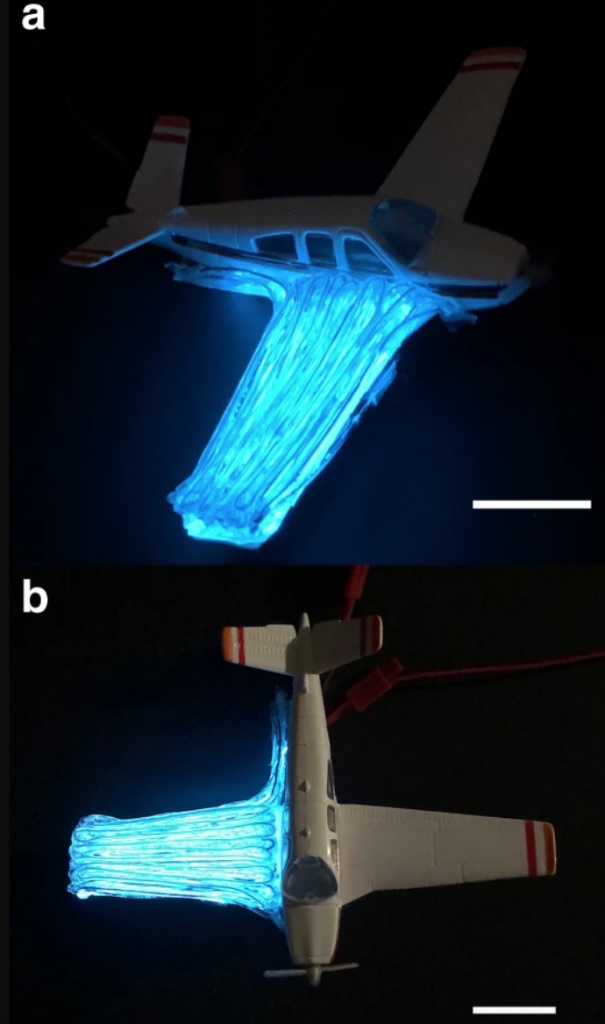
China3D printingNet September 20th, the innovation of printing electronic equipment has contributed to3D printingThe development of alternative methods and exciting applications focuses on printing methods and ink materials. This is a constantly evolving and evolving field, which promises to reduce costs and opportunities for innovative features, while the cost of traditional electronic products is often higher.Imagine being able to use a filament containing a detector3D printingFor the entire model airplane wing, Tongjin can also detect any microscopic cracks that are meaningful.
This is a new method that MIT researchers have been working on to develop, the method uses the standard3D printingThe machine generates a functional device in which the electronic device is embedded. These devices are made of fibers containing a variety of interconnected materials that can illuminate, sense the surrounding environment, store energy, and more.
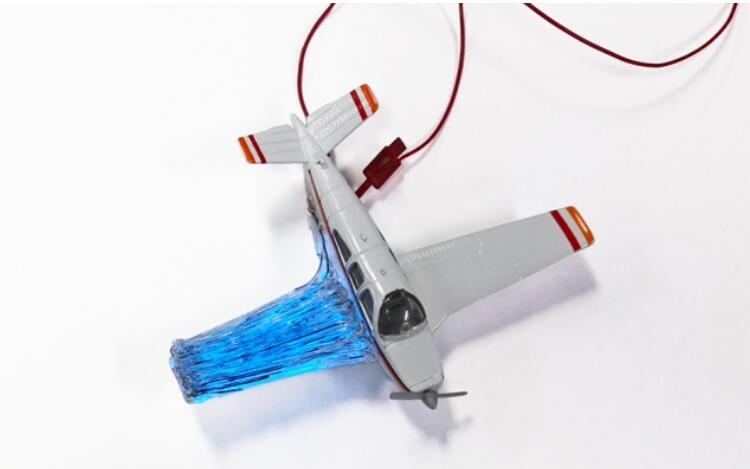
According to the new3D printingMethods, the design and manufacture of functional systems with 3D form factor shapes can realize applications in many fields such as photonics, sensing, energy storage, and electronics. However, so far, printing different material categories to manufacture electronic devices is a complex manufacturing challenge in itself, because different printing methods have been developed specifically for various material categories. The researchers’ alternative method claims to surpass some of these traditional barriers.
Although the filaments used in model (aircraft) wings contain eight different materials, in principle they may contain more. Prior to this work, a printer capable of depositing metals, semiconductors and polymers on a single platform still did not exist, because printing these materials required different hardware and technologies.
The system uses traditional3D printingThe machine is equipped with a special nozzle and a new type of filament to replace the usual single-material polymer filament, which is usually completely melted before being extruded from the printer’s nozzle. The researchers’ new filament has a complicated internal structure, composed of different materials, arranged precisely, and covered with a polymer coating.
According to MIT, in the newly remodeled printer, the nozzle works at a lower temperature and pulls the filament faster than traditional printers, so that only the outer layer is partially melted. The interior is kept cool and strong, and its embedded electronic functions are not affected. In this way, the surface melting is just enough to make it firmly adhere to the adjacent filaments during the printing process to produce a strong 3D structure.
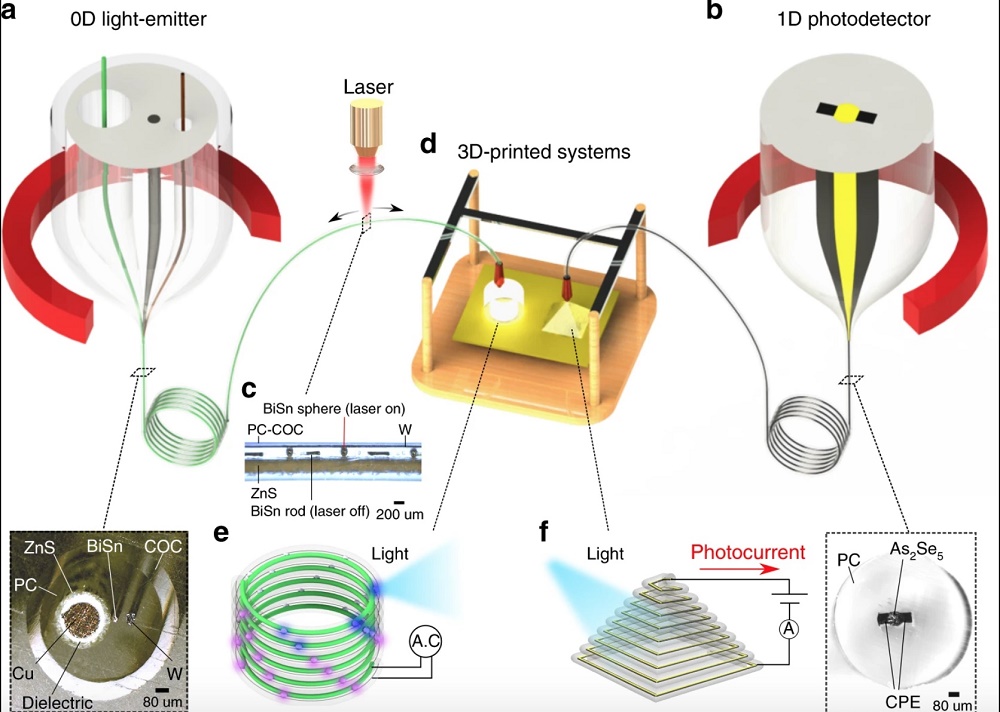
The printer used by the team is a RoVa3D multi-nozzle printer, which is a standard type3D printingMachines, called Fused Deposition Modeling (FDM, Material Extrusion) printers, can already be found in many laboratories, offices and even homes. Although the software used to generate and read the g-code for printing is Slic3r and Prometheus. The hot end consists of a stainless steel tube up to 2 mm in length and is heated by a nickel-chromium alloy wire. Then insert high temperature insulation tape between the hot end and the area above the hot end.
This method is three times faster than any other current method of manufacturing 3D devices, and is compatible with all3D printingLike machines, it provides more flexibility in the form of production than typical manufacturing methods.This method is unique3D printing, To be able to build any free-form device, which has been impossible to achieve by any other method so far.
China3D printingOnline reviews:
Just a few days ago, MIT’s Computer Science and Artificial Intelligence Laboratory team released another3D printingWorking ink, which is a reprogrammable ink that changes color when exposed to ultraviolet light and other light sources. It is called the PhotoChromeleon system, which consists of many dyes sprayed on the surface of the object, and the color can be changed as needed.With the creation of functional design, MIT will certainly develop rapidly, thereby further promoting3D printingTechnology development. Filaments with embedded circuits show many promises, and they can be used to print complex shapes in biomedical and robotic devices.
China3D printingNet original article, please indicate the source for reprinting!
(Editor in charge: admin)
0 Comments for “MIT invents a new method for built-in 3D printed electronic components”