

China3D printingNet October 16th, in the recently published “DLP Additive Manufacturing Manufacturing3D printingIn “Characteristics of Lenses and Diffraction Gratings”, international researchers studied the use of DLP 3D printingDigital manufacturing of optical parts.
When studying DLP technology, researchers intend to explore the high spatial resolution available and investigate the potential of new optical functions. The research team used Autodesk Ember with Standard Clear PR48 light-curable resin 3D printingMachine-made lenses and diffraction gratings, where the lens is printed at 0° and the diffraction grating is printed at 90°.
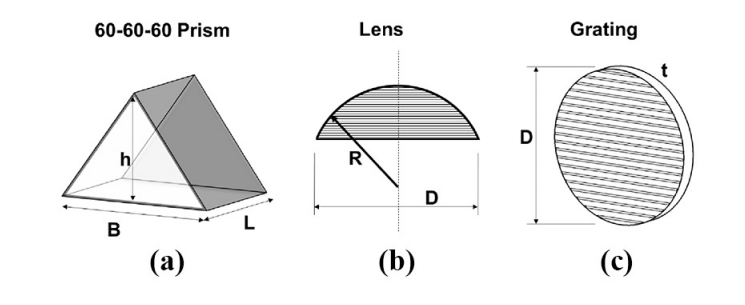
Schematic diagram of printed optical components
for3D printingIn the process, the researchers modeled the part in Autodesk Inventor, using PrintStudio for slicing, Autodesk Ember 3D printingMachine and PR48 resin, sanded with sandpaper, and then polished.
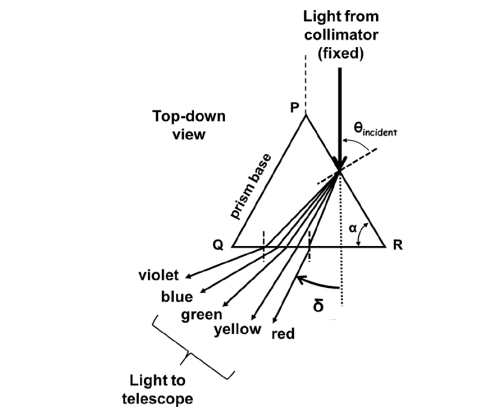
The schematic diagram shows different collimated light rays passing through a prism with the vertex angle a
In this study, in order to characterize the optical components as a whole, researchers must study the interaction of light with the materials used.
The authors said: “The refractive index and percent transmittance are determined experimentally at different wavelengths across the visible region of the electromagnetic spectrum.”
In order to calculate the refractive index of the material, the research team used the following methods:
Prism Spectrometer
Helium discharge tube
Prism made of light-curable resin
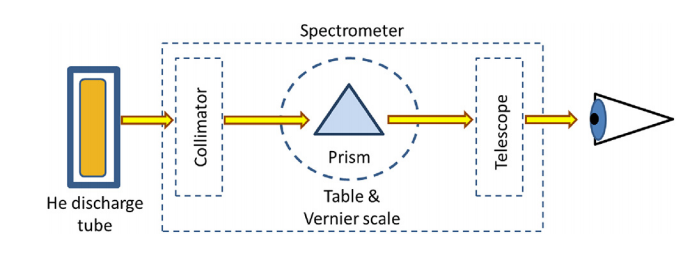
The researchers said: “The triangular prism is made of PR48 resin, cured with a UV lamp with a wavelength of 405 nm, and then polished and polished. “After processing, all the vertex angles are determined to be 60° by a protractor. “
When they checked the light refraction, they could only identify five main wavelengths, and when they tried to use the spectrometer, only four could be measured.
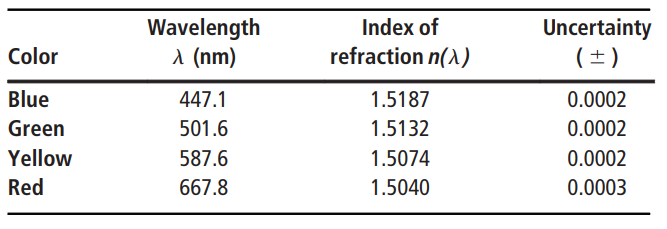
The refractive index of PR48 prism at four known wavelengths
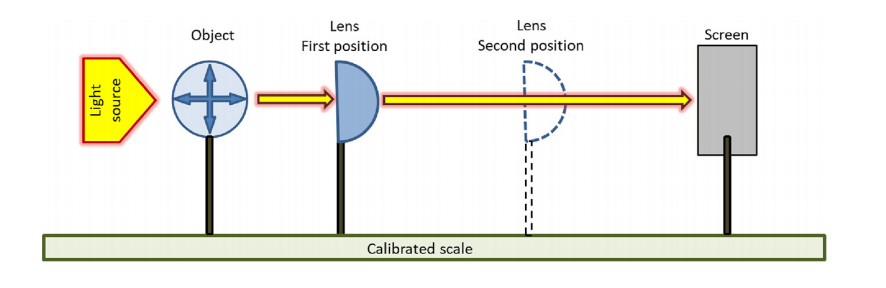
The “Bessel method” based on the reversibility of light is used for measurement3D printingThe focal length of the rear lens. They pointed out that it is possible to manufacture convergent lenses with focal lengths that “reasonably match”, while the polished lens differs by only 0.6.
The authors also pointed out that there is a difference between the theoretical focal length and the experimental focal length, but they believe this is because polishing “changes the radius of curvature of the lens.” There are other “intrinsic limitations” that can affect lens performance, such as the approximation of curved surfaces in 3D software, Ember’s printing resolution, and anisotropy issues.
“The most interesting part of this work is the use of3D printingTechnology makes a diffraction grating. By analyzing the diffraction patterns produced by these printed gratings, the periodicity of the slits and the effective slit width can be estimated. “These gratings are unique because the effective gap width fills the entire volume of the printed part. This aspect makes it possible to integrate two or more optical devices in a single printed part. For example, to produce lenses combined with diffraction gratings. .
China3D printingOnline reviews:In the field of optics3D printingIt is becoming more and more popular because it provides many benefits to the industry from increasing affordability to increasing speed and the ability to experiment and customize. Nowadays, researchers and manufacturers are innovating technologies to make smoother parts, micro-optics, and custom lenses at reasonable prices.
China3D printingNet original article!
(Editor in charge: admin)
0 Comments for “Researchers use DLP 3D printing technology to digitally manufacture 3D printed lenses”