

China3D printingNet December 11th, in 2019, the desktop3D printingContinue to move towards wider adoption. And, so far, it looks no different from the industrial field in some respects.
New products for familiar faces
A much-needed new type was launched in 20183D printingAfter the machine, MakerBot released an upgrade to the system in 2019. Method X has improved Method, with3D printingThe ability of ABS plastic is because the temperature of its manufacturing room is increased by 100°CC.
Ultimaker announced the launch of two new3D printingMachines, namely S3 and S5, one of which can be purchased, and the latter can be purchased as part of the bundled software including Air Manager. Although the air manager has not yet obtained UL’s green certification for the S5, it does prevent the printer from emitting some exhaust gas and improves the temperature and humidity control in the building room.The bundle also includes a material station for retaining filaments and pre-feeding materials to the printer for continuous3D printing.
S3 is an upgraded version of Ultimaker 3, released a year and a half ago, with a larger build volume, automatic bed leveling, larger nozzles and the ability to use abrasive composite materials.3D printing(to a certain degree) .
In industry3D printingAfter progress in the field, large-format printer manufacturer Mimaki announced the development of desktop3D printingmachine.By the Japanese company and South Korea3D printing3DFF-222 desktop co-created by machine manufacturer Sindoh3D printingThe size of the machine is 8.27 inches x 7.87 inches x 7.67 inches, a semi-automatic bed is flat, a built-in camera for remote monitoring, a HEPA filter, and a PLA filament filter element.
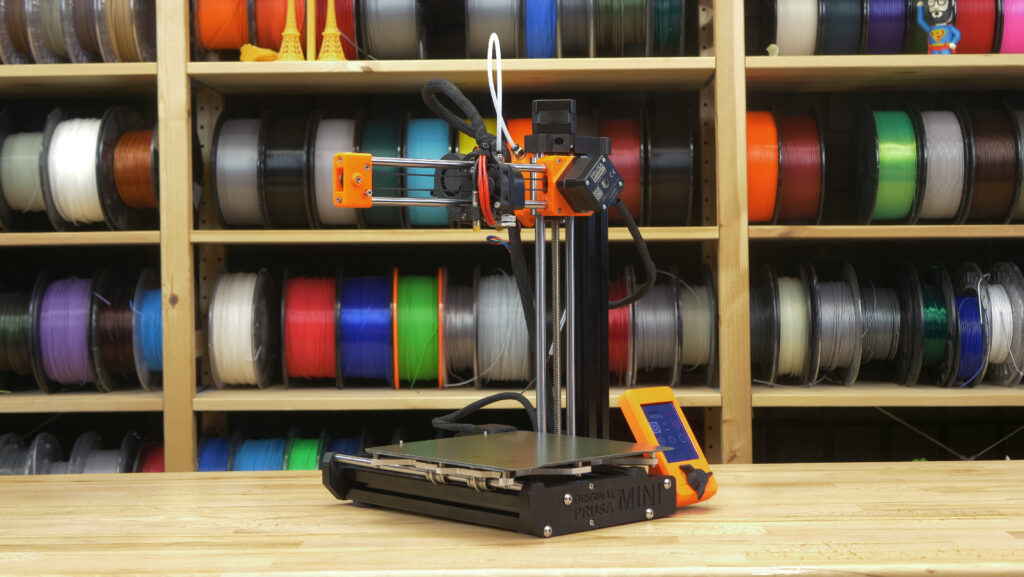
Prusa Mini.
So far, Prusa has managed to overcome the desktop3D printingFoam and announced the $349 Prusa Mini printer. Even at this price, the machine has an automatic bed leveling, a color LCD screen and a print volume of 18×18×18 cm (7.1 x 7.1 x 7.1 inches). It is a high-quality printer with a small desktop space.
This year, Aleph Objects was acquired by Fargo Additive Manufacturing Equipment, which made LulzBot
3D printingThe machine series survived. Strangely, the company announced that it will release bio-printers this year and enter Europe. Maybe it hopes to save itself through these two actions, or it may become too slim because of their spread. Either way, we are very happy to see Aleph Objects resurrected.
In contrast, Formlabs continues to grow rapidly, making its first acquisition.Issuing bio-specific3D printingMachine 3B Form; And introduce the latest version of its SLA technology in the form of Form 3 and Form 3L. The new printer has what Formlabs calls low-force stereolithography, in which a new optical system directs the laser to a direction perpendicular to the build plane, and releases the object from the screen with a small force, so that finer printing can be achieved Details, larger parts, fewer errors and lighter support structure.
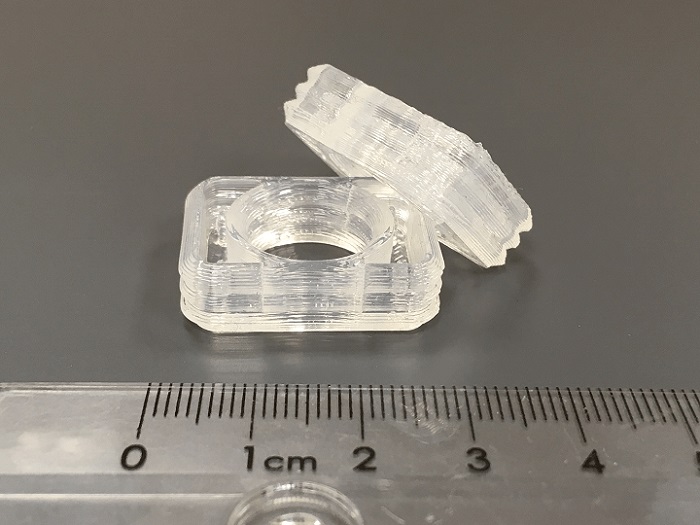
The liquid additive manufacturing company of RepRap in Germany was developed by the Dow Chemical Company and can be used for the new L320 LAM 3D printingIn the machine, and can use silicone materials for printing.
In the desktop field, other well-known companies that announced new printers this year include BCN3D, Lumi Industries, FELIXprinters, Raise3D, German RepRap, Dremel, gCreate and Photocentric.
Another interesting development that occurred during the year was that XYZprinting stated that it is moving out of the consumer sector and focusing on industrial technology. Although it has increased space by selling low-cost printers, the annual sales of low-cost printers will be around 40,000 units after the launch. In fact, a subsidiary of Taiwan’s large contract manufacturer New Kinpo has released countless such desktops, including a combined scanning and printing system, a “full-color” printer, and several beginner-level printers.Despite the changes, XYZprinting will continue to support its entry-level printers and even launch da Vinci Color 5D, which includes 2D inkjet paper printers and laser engraving machines as well as full-color3D printingFeatures.
Industrial desktop
This year, continued the “desktop” 3D printingThe trend that the machine is gradually disappearing at the lower price end of the extruded space. Companies that are already committed to creating industrial-grade fuse manufacturing systems have released new products, and other desktop companies have also joined the competition.
3ntr this year, it announced the launch of Spectral 30
3D printingMachine, the printer can3D printingAdvanced plastics such as PEEK, PEI (ULTEM) and PEKK. The printer has four nozzles that can reach 500°C, a print bed that can reach 300°C, and a chamber that can reach 250°C, as well as liquid cooling, automatic plate leveling and dryer, which can be protected during printing Filament.
Roboze and 3ntr go hand in hand and released the first batch of FFFs using PEEK, PEI and PEKK outside of Stratasys
3D printingmachine. This year, the company launched the ARGO 350 named after its 350X300X300mm volume. The generation chamber can reach 180°C, while the dual extruder can reach 450°C. Roboze also launched the ARGO 500, which has a print volume of 500 x 500 x 500 mm and the temperature of the extruder can reach 550°C. Both are equipped with Roboze’s beltless system designed to improve accuracy, and are also equipped with two filament dryers that automatically level the bed and load filaments.
WASP in construction3D printingThe world is more famous, the new Delta WASP 2040 TECH can print with PEEK by using a nozzle that can reach at least 380°C and a stainless steel insulated printing chamber. It is also worth noting that, unlike the foregoing, the printer uses particles instead of filaments.
3DGENCE is still new to high-temperature printing, but at this year’s Formnext, it launched its Industry 4F20 system, which can be printed with PEEK and PEI, and has also developed a specially developed soluble support. The double extruder can reach 500°C, while the chamber and baffle can reach 180°C. The Polish company designed a unique quick-change modular printing system with three interchangeable modules. The new printer includes a filter for controlling ultrafine particles and VOC.
Materials and accessories
Although desktop3D printingMachines are increasingly fusing the boundaries between “entry level” and “industrial”, but there have been some developments in materials and accessories related to these systems. Almost every major chemical company is on site, so instead of breaking down each of the raw materials announced this year, it is better to focus on a project undertaken by the largest chemical company: BASF.
BASF3D printingThe solution company developed Ultrafuse 316L, a stainless steel particle incorporated in a nylon matrix. The material can be used to print green objects, which are then turned into brown parts by catalytic degreasing, and then sintered in a furnace to obtain 316L stainless steel parts with a metal content of 90%. The material is sold on the market through iGo3D, MatterHackers and Ultimaker.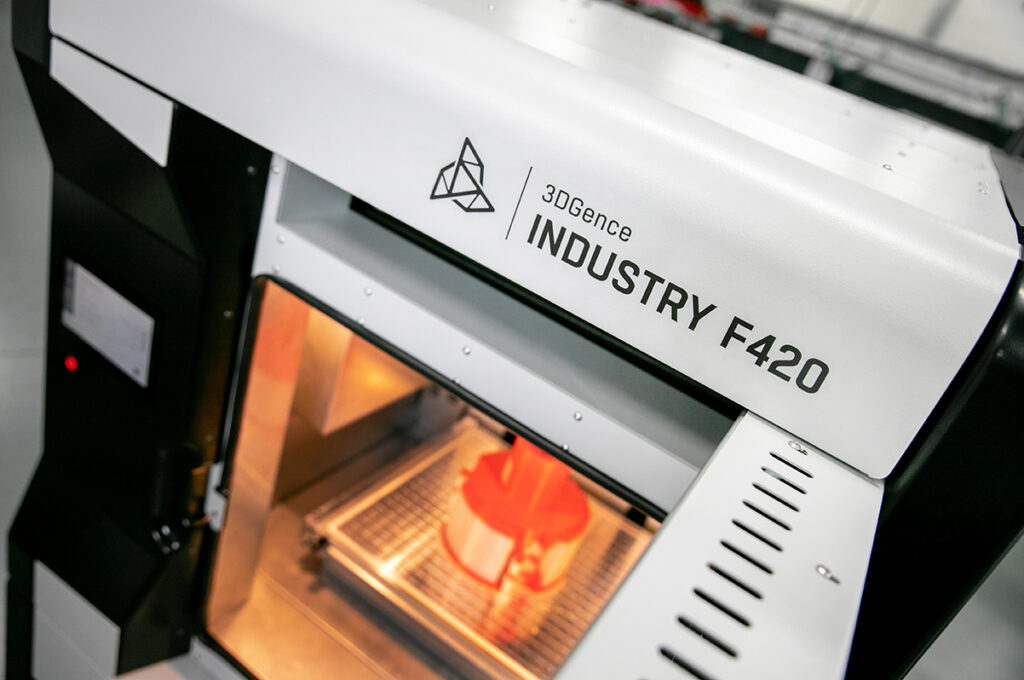
BASF’s Ultrafuse 316L
0 Comments for “Review of 3D Printing in 2019: Desktop 3D Printing”