

China3D printingNet September 21st, in the past few years, the emission of volatile organic compounds (VOC) is a by-product of the FFF process and has become the subject of many studies. In 2017, a study funded by SajTom Light Future Ltd. in Poland concluded that under the condition of adequate ventilation, the melting of materials such as ABS, PLA, PET and nylon will not harm its users.
The findings of UL’s two-year investigation report also found that when appropriate precautions are taken,3D printingThe particulate matter and VOC emissions produced by the process are generally low.
Now, scientists from the U.S. Environmental Protection Agency (EPA) are studying the VOC emitted by ABS carbon fiber reinforced carbon nanotubes. Again, in this case, the same rules surrounding adequate ventilation will apply, but through cooperation with the Consumer Product Safety Commission (CPSC) and the National Nanotechnology Program (NNI), the EPA team is seeking more detailed research on this.
3D printing
To study VOC emissions” alt=”ABS + CNT filament
3D printing
To study VOC emissions” />
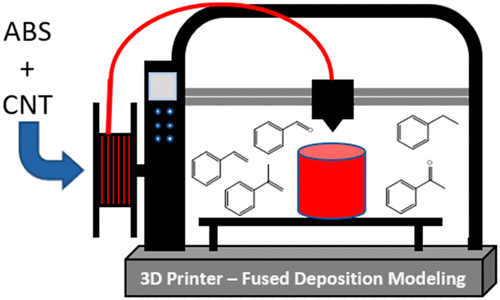
ABS + CNT filament3D printingTo study VOC emissions. The picture comes from the US EPA.
3D printingnanomaterials
EPA researchers are exploring the unique chemical and physical characteristics of nanomaterials, including size, shape, chemical composition, and stability, to help develop predictive models to determine the possibility of higher risks. As stated by the EPA, such nanomaterials are found in more than 1,300 commercial products, such as medical devices, textiles, fuel additives, and cosmetics.
In order to understand the impact of nanomaterials on human and environmental health, the commercial ABS filament was combined with Lulzbot TAZ 3D printingTo determine how VOC emissions change.In this case, it can be simulated under various conditions3D printingIn the process of different heating, melting and formation of carbon nanotube filaments (CNT) of plastics to quantify and characterize VOC emissions.
Dr. Al-Abed’s team carefully considered the temperature, the time to heat the material, and the oxygen concentration at the nozzle. These factors are replicated in customized reactors and mass spectrometers (also called thermal diagnostic research systems (STDS)) to identify combustion-related emissions.
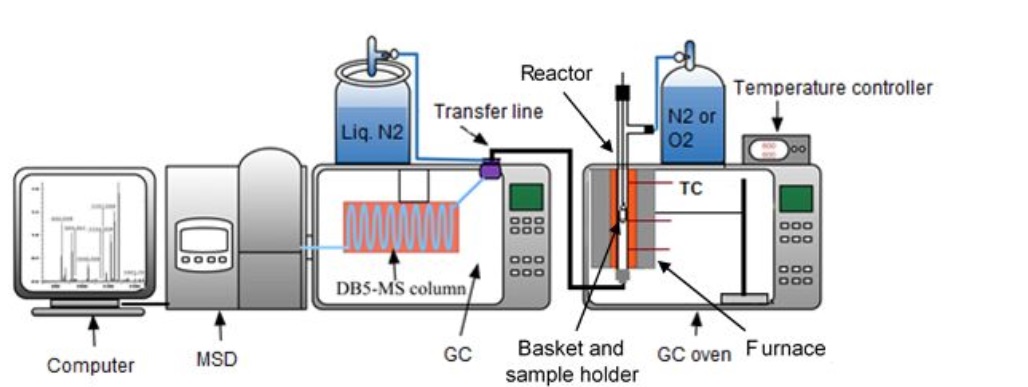
Schematic diagram of the Thermal Diagnostic Research System (STDS)
captureVolatile Organic Compounds (VOC) emissions
The VOC emissions of CNT-infused filaments and “normal” ABS filaments are compared.The research team found that materials containing CNTs will release two new VOC gases, which may affect3D printingUsers of several kilograms of material pose an inhalation hazard.
In addition, the researchers concluded that increasing the printing temperature has the greatest impact on increasing VOC emissions, followed by the lengthening of the time to heat the material. CNT also demonstrated the “capture” of certain VOC gases in3D printingAbility in plastic pellets.
The study pointed out that the researchers’ instruments cannot directly measure these particles, so further research is needed to understand their potential impact on human health.
China3D printingNet original article!
(Editor in charge: admin)
0 Comments for “The U.S. Environmental Protection Agency explores the emissions of volatile organic compounds from the 3D printing process”