

In recent years, 3D printing technology has developed rapidly. Because of its important application potential in civilian and military manufacturing, it has been highly valued by countries all over the world.The British “The Economist” magazine in the article “The Third Industrial Revolution”3D printingTechnology is listed as one of the important signs of the third industrial revolution.American scientists will3D printingThe industry is listed as “the ten fastest-growing industries in the United States.”In the field of equipment maintenance3D printingThe technology also has broad application prospects and can be used for the rapid manufacturing of equipment maintenance spare parts and tools.The U.S. military has invested a lot of money in development3D printingTechnology will have an important impact on the maintenance and support of the US military’s future battlefield equipment.
one,3D printingBasic concepts and development status of technology
3D printingThe principle of technology is basically the same as that of traditional printing. Traditional printing uses a printer to spray ink onto a flat surface (paper, cloth, etc.) to form a two-dimensional image.and3D printingFirst, collect the three-dimensional data of the object or spray the ink on the plane (paper, cloth, etc.) to form a set of data, and then the printer is divided layer by layer. For each layer structure of the cutting, press Hierarchical printing.3D printingThe technology uses continuous physical layers to add material layer by layer to form a three-dimensional entity, which is different from traditional material removal processing technology, so it is also called additive manufacturing technology.
As a comprehensive application technology,3D printingIt integrates digital modeling technology, electromechanical control technology, information technology, materials science and chemistry and many other cutting-edge technical knowledge, with a high technical content.3D printingMachine is3D printingIts core equipment is a complex mechatronics system integrating machinery, control and computer technology. It is mainly composed of subsystems such as high-precision mechanical systems, numerical control systems, injection systems, and forming environments.In addition, new printing materials, printing processes, design and control software, etc. are also3D printingAn important part of the technical system.
Currently,3D printingThere are more than a dozen different forming methods in technology, and they are usually divided into two categories: The first category is forming methods based on laser technology, such as stereolithography, paper lamination, selective laser sintering, selective laser melting, etc.; The second category is non-laser technology rapid prototyping methods, such as fuse deposition,3D printing, Mask light curing, impact particle manufacturing, solid grinding and curing, etc.
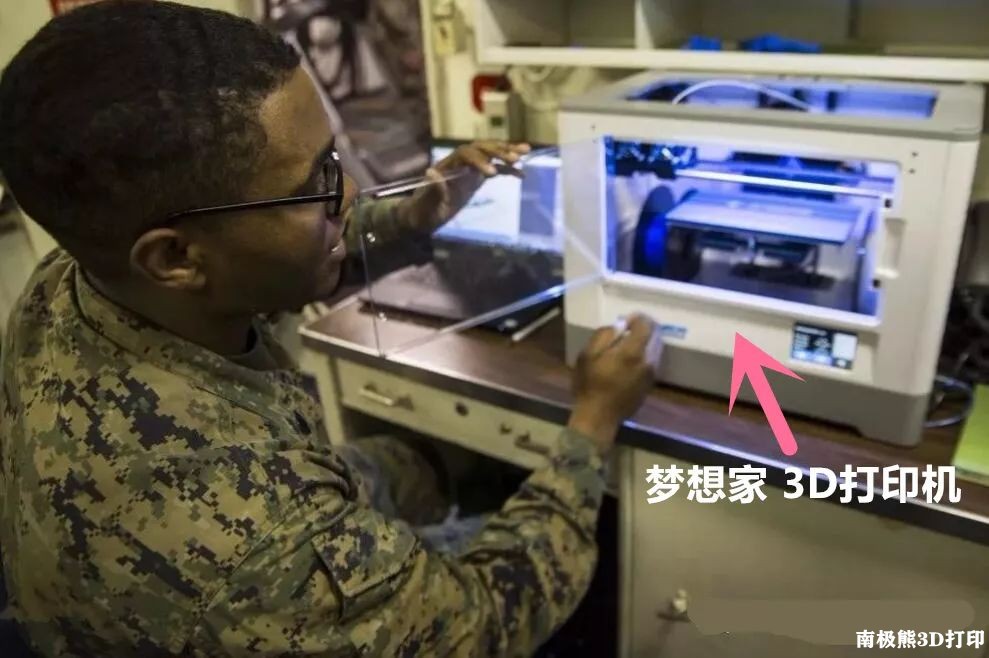
With the vigorous promotion of countries all over the world,3D printingThe technology is gradually becoming mature, and the printing materials and printing accuracy have been greatly improved. At present, the general printing accuracy can reach a fine resolution of 600dpi, the minimum thickness of each layer of material can reach 0.1mm, and the smallest feature size can reach 0.1mm. Printing materials can be applied from stone, metal to polymer materials. In addition, the printing speed has also been improved, printing with higher resolution, the vertical height of printing can reach more than 1 inch (about 2.54cm) per hour. In developed countries in Europe and America,3D printingThe technology has initially formed a successful commercial model. For example, in the consumer electronics industry, aviation industry, and automobile manufacturing,3D printingThe technology can produce small batches of customized parts at a lower cost and higher efficiency to complete complex and delicate shapes.
two,3D printingApplication Prospects of Technology in Weaponry Maintenance
With the rapid development of technology,3D printingThe concept has not only stayed in the industrial design stage, but has been applied in more and more fields, and has good application prospects in the field of weapon equipment maintenance.
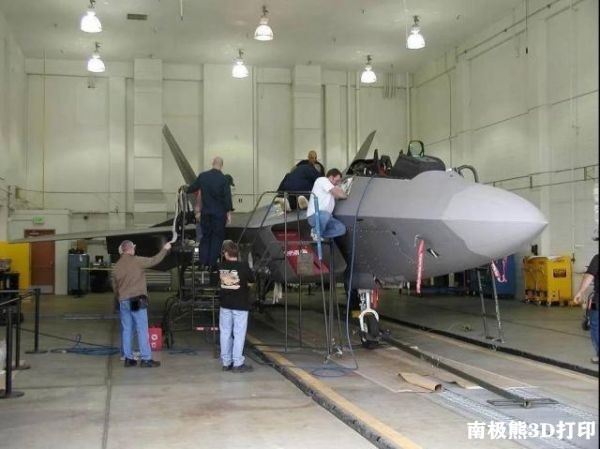
First, it can be used for rapid manufacturing of spare parts for wartime equipment maintenance. During wartime, maintenance spare parts must rely on multi-level supply channels. A small number of key spare parts are carried by troops and preset on the battlefield for emergency repairs of battle-damaged equipment. However, this part of spare parts is limited in quantity and is easily exhausted during wartime. Ensure a complete range of spare parts; most spare parts rely on supply bases and manufacturers behind the battlefield to provide guarantees. Spare parts supply takes a long time and it is difficult to provide timely and effective guarantees during wartime.Apply on the battlefield3D printingThe technology can provide an effective spare parts solution for the emergency repair of battle-damaged equipment.In wartime, you only need to use the pre-carried equipment parts data to use3D printingEmergency spare parts can be manufactured by the machine, and the combat capability of equipment can be quickly restored, which can effectively alleviate the burden of the spare parts supply system.
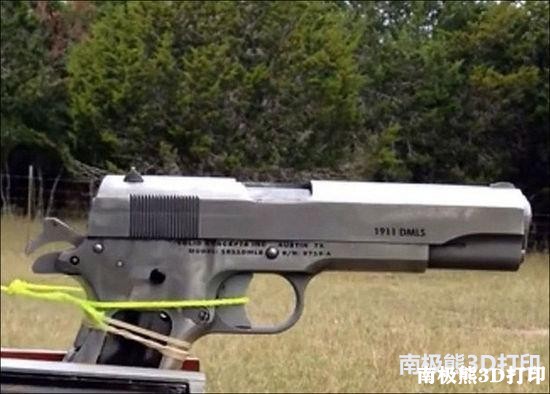
The second is to use maintenance tools and equipment for battlefield production equipment. As wartime equipment use and emergency repairs face a variety of emergencies, the standard maintenance tools and equipment issued by frontline maintenance personnel are limited, which may be difficult to meet the needs of wartime emergency repairs.use3D printingTechnical, front-line maintenance personnel can print the maintenance tools or equipment required for maintenance on the spot according to the pre-prepared drawings. If necessary, the rear designers can temporarily design new maintenance tools and equipment according to the front-line maintenance requirements, and then use the front-line deployment3D printingMachine-made customized repair tools.
three,3D printingAdvantages of technology in the field of weapon equipment maintenance
One is that complex spare parts can be manufactured quickly.because3D printingThe process has nothing to do with the complexity of the parts, and it is truly free manufacturing, which is unmatched by traditional methods. Taking selective laser sintering technology as an example, there is no need to fabricate the support in advance. Using unsintered loose powder as a natural support, parts of almost any shape can be formed, which is particularly effective for parts with complex internal structures. This feature is particularly suitable for manufacturing complex titanium alloy structural components, aero engine turbine blades with complex internal cooling channels, internal materials, and tank armor with complex structures. This will greatly reduce the production cost of complex weaponry components. .
Second, the unit price of the product has nothing to do with the batch, which is especially suitable for the production of single and small batch parts. This point has extremely high application value for the maintenance of a small number of weapons. Take the ship as an example. The naval forces of many countries have deployed a small number of ship equipment with a small number of installations, a large number of special parts, and difficult maintenance and support. Due to the small demand, many maintenance spare parts for ship equipment cannot be manufactured on mass production lines, and spare parts can only be provided by means of scattered production parts, which is costly and has a long cycle.and3D printingThe cost of component production has nothing to do with the production batch, which greatly improves the problems of traditional production methods, and is of great significance for the maintenance and support of a small number of weapons and equipment installed.
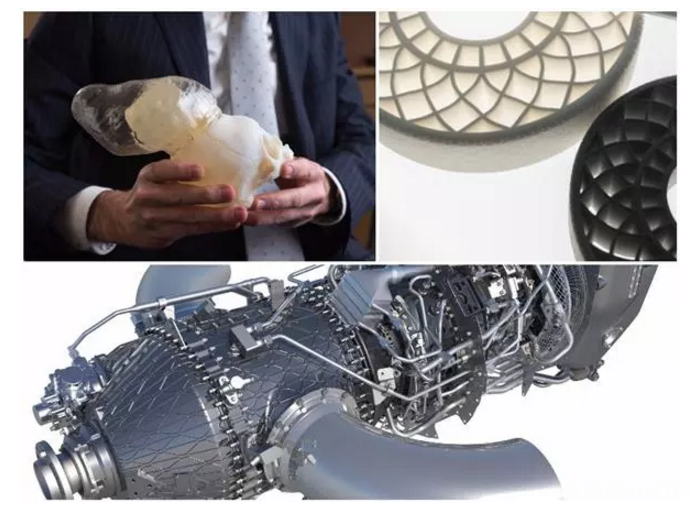
The third is the short production cycle. It only takes a few hours to tens of hours from CAD design to completion of parts processing. The entire production process is digitalized and can be revised and manufactured at any time. This feature makes it particularly suitable for improving the reliability and maintainability of weaponry components. In the past, the reliability and maintainability of weapons and equipment were fixed after they were finalized. It was very difficult to improve the design of equipment components, introduce new technologies, and improve their reliability and maintainability.and3D printingTechnology can quickly adjust the design of equipment components by modifying component drawings, which is of high value for improving and enhancing the reliability and maintainability of weapon equipment components.
Fourth, there is no waste of materials. The traditional machining technology is to carry out some form of cutting, extrusion and other operations on the basis of raw material blanks, so as to remove excess raw materials and finally process the required part shape. However, in this process, raw materials will be lost, and the more expensive the alloy is, the more difficult it is to recycle, which increases the production cost and wastes valuable resources. For example, the titanium alloy processing of the new generation of fighter jets will lose a lot of expensive Of aviation titanium alloy.and3D printingThere is no waste of materials in technology. In any part production process, the used powder becomes the part itself, and the unused powder can still be used. This is very high for reducing the production cost of advanced weaponry spare parts. Economic value.
Four,3D printingDevelopment and Application of Technology in the Field of Maintenance and Support of U.S. Arms and Equipment
Currently, all branches of the U.S. military are promoting3D printingThe development and application of technology has begun to use in the production and maintenance of some equipment3D printingTechnology to make parts for3D printingThe application of technology in future equipment maintenance support provides a predictable prospect.
According to the December 2016 article on the US “Air and Space Power Magazine” website. American researchers discussed the application status and development space of additive manufacturing in the field of defense.
(1) Further clarify the significance and application prospects of additive manufacturing technology in the field of equipment maintenance support. Research believes that additive manufacturing has far-reaching significance for the logistics and support work of the US military. The Chairman of the Product Assurance Committee of the Aviation Industry Association said that additive manufacturing is a disruptive technology that will reshape the maintenance and support model in the future, reduce the cost and logistical burden of distributing, storing and managing spare parts inventory, improve the availability of the system, and greatly improve The level of combat readiness of the army.
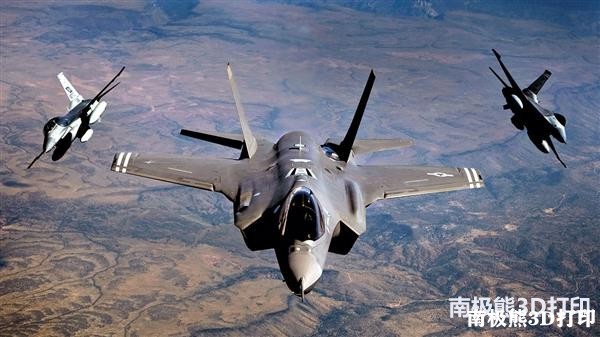
(2) Strengthen research and management of additive manufacturing technology. The United States has gradually formed a work system for research and application of additive manufacturing technology from the national, defense, and service levels. At the national level, the United States has established the National Institute of Manufacturing Science, which is responsible for the development and technical planning and leadership of additive manufacturing technology. Since 2015, it has begun to study the application of additive manufacturing in equipment maintenance support. The Ministry of Defense has a maintenance operation additive manufacturing working group of the Ministry of Defense. It cooperates with the industrial sector to formulate a comprehensive strategic vision for the Ministry of Defense, promotes the implementation of collaborative tactics of additive manufacturing technology, and supports the Ministry of Defense’s global weapon system maintenance companies. At the service level, the Army, Navy, and Air Force have also planned a roadmap for the development of additive manufacturing technology and specific development and application plans and work arrangements.
(3) Speed up3D printingThe development of multiple technologies such as technology and testing and certification technologies provides a broader space for the application of additive manufacturing in the field of equipment maintenance and support.
(4) Determine a reasonable business model of additive manufacturing maintenance support, as well as specific operation plans, and quickly promote the wide application of additive manufacturing technology in the field of maintenance support.
(5) Facing problems and challenges head-on. The successful application of additive manufacturing in the field of maintenance requires the cooperation of various departments such as product manufacturing and maintenance, and involves issues such as technical data management, application of interoperable industrial standards, and data ownership. In addition, it is necessary to guard against the network security risks of the distributed additive manufacturing environment, and protect the integrity of the three-dimensional input data and industrial control systems in the manufacturing and maintenance environment.
The various branches of the US military have also conducted research on the application of additive manufacturing technology in maintenance support. The Army Aviation and Missile R&D and Engineering Center is cooperating with the Corps Christi Army Armory to verify laser additive manufacturing technology for the recovery, recovery and reprocessing of high-value aviation assets in storage, analysis, failure assessment, and recovery facilities. use. Additive manufacturing will be used to repair Army Aviation assets that cannot be restored through traditional manufacturing methods. Project goals include shortening the procurement time from order to delivery of replacement parts, formulating qualified maintenance procedures for candidate parts, and reducing costs so as not to affect operations, support, and readiness.The U.S. Army has also developed a technology based on additive manufacturing3D printingExpedition kit. It is a rapid manufacturing equipment based on additive manufacturing technology that can be used to manufacture special tools, spare parts and other components. It can be deployed on the battlefield, equipped with soldiers as close as possible to the required location, and maintenance troops with limited supply and support. Quickly manufacture combat readiness repair parts, professional tools, key spare parts and customized packaging for brigade support battalions, maintenance supply troops and other special mission troops.3D printingThe expedition kit is equipped with the equipment, software, and tools needed for the job, as well as an authorized design file database, which can help soldiers to manufacture on the battlefield and meet the needs of rapid repairs. The toolkit also enables native soldiers to innovate solutions validated by engineers to meet specific operational and mission-related needs.
In terms of the navy, the US Navy is stepping up planning and actively advancing3D printingThe application of technology in the field of safeguards.The navy has formulated3D printingTechnology development roadmap, including: developing qualification inspection and monitoring capabilities for additive manufacturing components; standardizing additive manufacturing digital framework and tools; establishing an advanced integrated digital manufacturing network for the navy; creating better acceptance for navy personnel3D printingOpportunities to educate, train and obtain certificates; add an additive manufacturing coordinator in the procurement execution office. Additive manufacturing has amazing flexibility, can greatly improve the naval fleet’s life cycle logistics efficiency, improve the availability of combat materials, and reduce costs. The U.S. Navy used additive manufacturing technology during aircraft maintenance on the USS Essex Amphibious Assault Ship (LHD-2) at the Marine Corps Air Base in Cherry Point, North Carolina. In naval fleet readiness centers and regional maintenance centers, additive manufacturing is being applied in a variety of ways, which is conducive to improving the combat readiness of the fleet and saving time and costs. The Navy is conducting sea trials on the expected improvement in combat readiness. To enable additive manufacturing to produce universal parts rather than prototypes, the Office of Naval Research has turned to the industrial sector.
As for the Air Force, the Air Force Equipment Command has formulated an additive manufacturing implementation plan. The plan takes careful measures to solve various problems encountered by the Air Force in additive manufacturing with flexible and coordinated strategies. The Additive Manufacturing Implementation Plan establishes a solid foundation through standardized equipment, processes, tools, and procedures at the entire Air Force level. In a large network covering air force bases, maintenance and repair departments, engineering units, and many weapon system project offices around the world, building an effective additive manufacturing network requires new methods. It should learn from the experience of maintenance network integration and allow the Air Force to adopt Flexible deployment strategy. The Air Force conceived the application scenarios of additive manufacturing technology in the future combat concept.That is, a container full of polymer is transported by air and dropped to an isolated forward post for direct manufacturing3D printingComponents. The documents required for printing are sent via a secure space link, and the printer produces key parts within a few hours.
five,3D printingInsufficiency of technology and future development trend
3D printingThe technology is still in the preliminary stage of development, and it is still facing many bottlenecks and challenges in application at this stage.One is the high cost, the existing3D printingThe machine cost is still generally relatively expensive, which brings difficulties to its further popularization and application.Second, the printing materials are limited, currently3D printingMost of the molding materials use chemical polymers, which have relatively large selection limitations, poor physical properties of molded products, and certain hidden dangers in safety.The third is that the accuracy, speed and efficiency still cannot reach the level of traditional manufacturing.3D printingThe accuracy of the finished product is still not satisfactory, and the printing efficiency is far from being able to meet the needs of mass production.
3D printingThe speed of technological development is very fast. According to the survey results released by the authoritative report of the international rapid manufacturing industry3D printingThe industry output value maintained an average annual growth rate of 26.2% from 1988 to 2010. Report expectations,3D printingThe industry will continue to grow rapidly in the future. In 2016, the total output value of the industry, including equipment manufacturing and services, will reach 3.1 billion U.S. dollars, and in 2020 it will reach 5.2 billion U.S. dollars. With the further development and maturity of intelligent manufacturing,3D printingThe technology will be improved in speed, accuracy, and materials, and the cost will be further reduced, and it will be widely used in the field of equipment maintenance support
6. Improve the level of the support business command and management system
In order to meet the needs of future informatization and networked operations, Japan attaches great importance to the construction of military information systems, including maintenance and support information systems, and regards them as the primary task of developing an informatized weapon and equipment system. Japan’s maintenance support business information system includes equipment management system, maintenance management information system, general material management system, vehicle usage status system, inventory management system, supply and demand control system, etc. From the management level, the central (headquarters) information system, the Self-Defense Force information system and the grassroots regiment level system have been formed. In 2015, Toyotomi Murakawa, head of the Japan Maritime Self-Defense Force’s replenishment headquarters, participated in the launching ceremony of the “Marine Self-Defense Force Joint Replenishment System”. The system was developed by Fujitsu and aims to integrate various independent repair and replenishment systems to improve the efficiency and safety of repair and replenishment and reduce system operating costs. The Maritime Self-Defense Force’s joint repair and replenishment system is composed of four major business information systems: the munitions control system, the ship replenishment system, the aviation replenishment system, and the repair business system. The new system is expected to save 630 million yen in expenditures and 145,000 hours of business processing time for the Maritime Self-Defense Force each year. There are three main tasks of the system: complete repair and supply operations quickly and accurately; ensure information security including system security; strengthen the information sharing situation that makes full use of information technology, and save security costs through the integration of various systems and databases.
(Editor in charge: admin)
0 Comments for “The U.S. military systematically studies the application of 3D printing technology in equipment maintenance support”