

Introduction: This technology is expected to integrate smaller and more powerful batteries into products, and may be designed with recycling in mind.
Lithium-ion batteries are one of the enabling technologies for our 21st century lifestyle. These energy packs make it possible for mobile phones and electric cars, notebook computers and healthcare equipment, robots and remotely operated sensors. This is not surprising, because earlier this year, their developers were awarded the Nobel Prize in Chemistry.
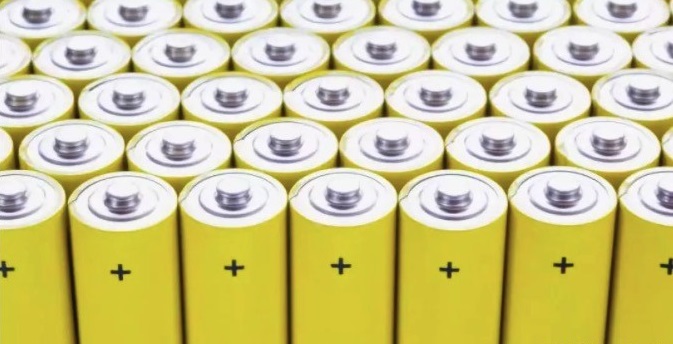
But materials scientists urgently need better batteries for the Internet of Things and next-generation personal devices. Better batteries will also play an important role in storing renewable but unstable energy sources such as wind and solar energy. Battery performance is the result of many different factors. Energy density is crucial, as is the ability to maintain charge without leaking, and the number of recharges-not only once, but thousands of times, and of course, safety.
Electrochemical researchers know very well how delicate this balance is. Therefore, battery manufacturers are cautious about trying new methods to avoid performance degradation. Therefore, battery performance enhancements are usually gradual and small. Where can the battery get major improvements?
The battery of the future will pass3D printingmanufacture
The answers are varied. Recently, Vladimir Egorov of the University of Cork in Ireland and some colleagues announced that future batteries will pass3D printingmanufacture. These researchers have studied various new battery printing technologies and believe that this will enable a new generation of smaller and more powerful devices.
3D printingIt can be a method of prototype design for testing, and it is now possible to print out peculiar foods, replacement body parts and even entire buildings. At the same time, many printers can also be used to mass produce automobile and airplane parts, as well as shoes and other items. And, when a new design is available, it can be printed quickly without having to reconfigure the factory space.
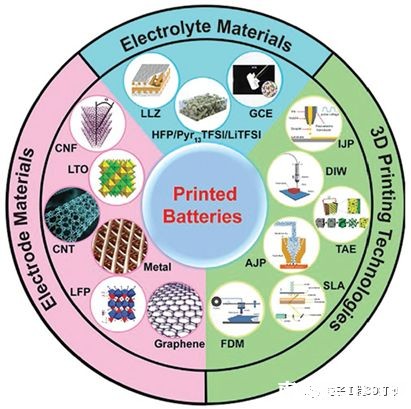
Materials scientists have also begun to try to use polymer inks and silver polymers as materials to print electronic circuits, eliminating the need for soldering. In this way, the circuit board can assume any shape and can even form part of the device structure.
However, one obvious limitation is that it needs to incorporate conventional batteries, which have specific sizes and shapes. The ability to print 3D batteries will change this. “If they can be printed and seamlessly integrated into the product design, then, for reasons of beauty and comfort or functionality, there is no need to accommodate a larger and fixed-size standard battery in the product design stage.” Egorov said .
easy to say, hard to do. The electroactive materials used in batteries are inherently reactive, and structures such as anodes and cathodes are physically complex. They must usually be ordered like crystals, sometimes they must be porous like molecular sponges, and they must have good chemical properties.
To create fit3D printingThe materials, whether by squeezing solids or liquids, or by liquid polymerization, are challenging. Once printed, these materials must maintain their electrical interconnection, strictly control any chemical reactions that occur between components, and ensure that the battery can be charged and discharged in multiple cycles.
Most importantly, the battery must be safe. All batteries must pass strict safety standards before they can be used in homes, vehicles, airplanes, etc. Leaking batteries can cause expensive damage, and the worst can cause fires. If possible, the test criteria must be changed to allow for constantly changing new designs.
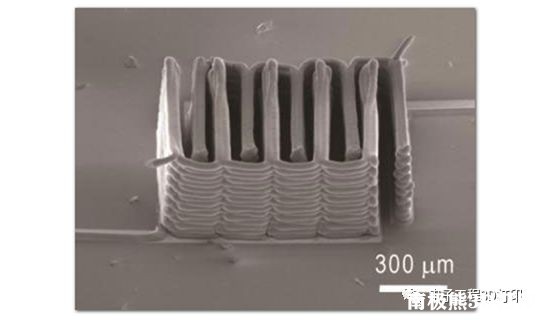
Even if all these challenges can be overcome, there is still one problem that needs to be solved urgently:3D printingCan the function of the battery exceed the existing design? Egorov and his team gave a comprehensive overview of the materials, methods, and challenges the battery industry faces when printing future power packs.But the reviewer missed an important element of future battery design, namely3D printingCan play an important role.
One of the biggest and most important challenges facing the battery industry is how to make its products recyclable. Today’s batteries are specially designed to be difficult to disassemble, so it is almost impossible to reuse the valuable materials they contain. This is not ideal for a technology that plays a central role in the transition from fossil fuels to a renewable energy society.
Therefore, reform is very necessary. The current thinking is that the design of batteries must take recycling into account from the beginning, and this will require a new way of thinking for battery designers.3D printingThe flexibility provided has the potential to initiate and accelerate this much-needed revolution.
Although Egerov and his colleagues ignored this issue in their paper-the word “recycling” did not appear in their paper, this is a problem that companies in the battery industry cannot afford.
(Editor in charge: admin)
0 Comments for “University of Cork, Ireland: Will the battery of the future be manufactured by 3D printing?”